Landscaper
Rock landscaping in Boise, Idaho
Rock landscaping in Boise, Idaho, built with the right rock, the right depth and edges that hold it in place. Call Kabe at (541) 961-7269 or schedule a consultation to swap thirsty lawn for rock that looks planned.
Rock landscaping in Boise, Idaho, built with the right rock, the right depth and edges that hold it in place. Call Kabe at (541) 961-7269 or schedule a consultation to swap thirsty lawn for rock that looks planned.
Rock landscaping in Boise is one of the most common requests I get from homeowners who are tired of mowing and watering grass that never looks good. They want something that looks clean all year and doesn't need much water. The trouble is that a lot of rock yards end up hot, weedy and a little sad, with gravel scattered onto the sidewalk. That isn't a problem with rock. It's a problem with how it was put in.
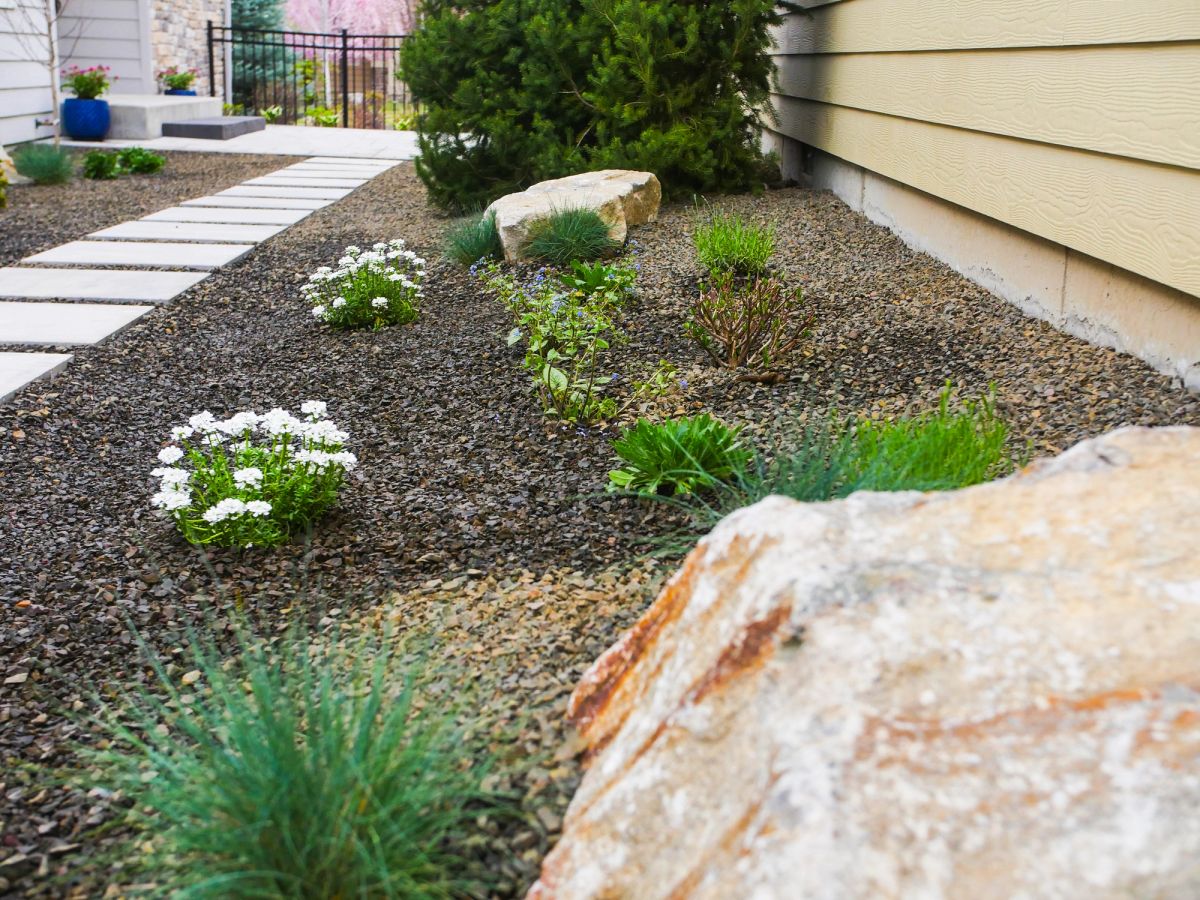
Rock landscaping means using loose rock, like gravel, river rock or decomposed granite, as the ground cover in beds, side yards, paths or whole sections of a yard. I plan where the rock goes, pick the type and size for each spot, prep the ground under it, set edges to hold it, and plant it so it doesn't feel like a parking lot. I do the work myself, start to finish.
Why rock makes sense here
The Treasure Valley gets hot, dry summers and a lot of wind. Water restrictions and rising water bills have a lot of people looking at turf reduction. Rock doesn't need water, doesn't need mowing and doesn't blow away like bark mulch can on a windy afternoon. On a slope or a narrow side yard where grass never did well, it's often the most practical choice.
Rock is a big part of xeriscaping, which is a way of designing a yard to need very little water. It also plays a role in desert landscaping and green landscaping, where the goal is a yard that works with our climate instead of against it.
Picking the right rock for each spot
Not all rock does the same job. Here's how I match rock to the space.
Crushed gravel
Crushed gravel has sharp, broken edges that lock together. It packs down well, so it's a good choice for paths and areas you walk on. It stays put better than round rock.
River rock
River rock is smooth and rounded. It looks great in beds and dry creek beds that carry runoff, but it rolls underfoot, so I don't use it for paths. Bigger sizes stay in place better on slopes.
Decomposed granite
Decomposed granite, often called DG, is granite broken down into small grains, almost like coarse sand. It packs into a firm surface and works well for paths and sitting areas. It can wash out on steep ground, so I keep it on flatter spots.
Cobble and larger rock
Cobble is fist-sized or bigger. I use it to line drainage paths and to add texture next to finer gravel. For big boulders and flagstone that get set one piece at a time, see my stone landscaping page.
What goes under the rock
The ground under the rock decides how well the yard holds up. Before any rock goes down, I:
- Strip out the old lawn and weeds, roots and all
- Grade the area so water drains away from the house and doesn't pool
- Dig deep enough that the finished rock sits a little below sidewalks and patios, so it doesn't spill over
- Pack the base under paths so they stay firm
- Use landscape fabric where it helps, like under gravel paths, and skip it in planting beds where it gets in the way of roots
Over time, dust and leaves settle into any rock bed, and weeds can sprout in that layer no matter what's under it. A thick enough layer of rock and a little upkeep each season keep that in check.
Edges that keep rock where it belongs
Loose rock wants to move. Kids kick it, snowplows push it and rain washes it downhill. A solid edge makes the difference between a yard that looks sharp for years and one that slowly spreads onto the lawn and the sidewalk. I use steel edging, concrete curbs or a row of set stone, depending on the look you want and what the rock sits next to.
Rock, heat and plants
Rock soaks up heat and gives it back. In a Boise July, a big stretch of bare rock against a south or west wall can make the house hotter and cook the plants next to it. I plan for that with:
- Shade trees or tall shrubs that cast shade on the hottest areas
- Plants that like heat and dry soil
- Drip irrigation to each plant, since rock doesn't hold water the way soil does
- Enough space between plants for them to reach full size
Plants are what make a rock yard look like a landscape. Without them, it's just gravel.
What changes the cost
The price of rock landscaping in Boise depends on:
- How much area you're covering and how deep the rock needs to be
- The type and size of rock
- How much lawn or old material has to come out first
- Grading and drainage work
- Edging material
- How many plants go in and whether drip irrigation is needed
- How close a truck can get to the area
Rock is heavy, so delivery and moving it by hand into a backyard can add up. I give a price after I've seen the space.
Rock landscaping across the valley
I work in Boise first, plus Eagle, Meridian, Nampa, Caldwell, Star, Middleton, Kuna, Garden City, Hidden Springs, Sun Valley and Ketchum. Rock work is part of my landscaping services and often goes in with new planting, paths or a smaller lawn.
If you're ready to trade thirsty grass for rock that looks planned, let's talk about it. Schedule a consultation for rock landscaping in Boise, or call me at (541) 961-7269.
More landscaper services
- Artificial turf installation
- Concrete masonry
- Desert landscaping
- Driveway landscaping
- Driveway or walkway paving
- Garden decorating
- Garden design
- Grading & resloping
- Grass seeding
- Green landscaping
- Hardscaping
- Hydroseeding
- Landscape installations
- Landscape management
- Lawn landscaping
- Outdoor step construction
- Outdoor water feature design
- Pool landscaping
- Retaining walls
- Sod installation
- Stone landscaping
- Stone masonry
- Tree landscaping
- Walkway landscaping
- Yard drainage
- Yard grading
- Yard landscaping
Rock landscaping is part of my landscaper services in Boise.
Rock landscaping questions
Dust and leaves settle into rock over time, and weeds can sprout in that layer. Removing the old lawn and weeds first, using a deep enough layer of rock and pulling the odd weed each season keeps a rock yard clean.
It helps under gravel paths, where it keeps the rock from sinking into the soil. In planting beds it can get in the way of roots and doesn't stop weeds that grow on top. I decide area by area.
Large areas of bare rock hold heat, especially against south and west walls. Shade trees, tall shrubs and heat-loving plants break that up and keep the yard more comfortable.
Crushed gravel or decomposed granite, because both pack down into a firm surface. Round river rock rolls underfoot, so I save it for beds and drainage areas.
It depends on the area, the type of rock, how deep it goes, the prep work and how far it has to be moved from the truck. I give a real price after a consultation.

Let's chat
Let's talk about your vision
If you're ready to create a space that's personal, timeless, and built to last, I'd love to hear what you're imagining. Let's start with a low-pressure conversation and see if we'd be a good fit to work together.
Schedule a Consultation