
Water Features
At Hockema Landscape Design & Build, we transform outdoor spaces through ponds, waterfalls, and fountains
Custom water feature design and installation for Boise, Eagle, Meridian, Nampa, Ketchum and Sun Valley.
Custom water feature design and installation for Boise, Eagle, Meridian, Nampa, Ketchum and Sun Valley.
Featured Packages
Three Aquascape systems, professionally installed
Starting prices for complete water features. Designed, specified, and installed for Idaho’s climate.


What water does to a space
Water changes how a property feels.
What water does to a space
There is a particular quality that moving water brings to a landscape. Not the look of it, though that matters. It's the sound. It’s the way it fills silence without overpowering it. It’s the way it stays present even when you're not facing it. A garden with water sounds different from the moment you step outside.
Still water (a reflecting pool or a quiet koi pond at dusk) does something else. It creates depth where there was only surface. The sky, the surrounding plantings, the late light of a summer evening: all of it reflected back at you in a way that makes the space feel larger and more considered than it would without. It also creates a sense of serenity.
Hi, I’m Kabe. I've been designing and building water features in the Treasure Valley for years, and I've come to understand that the clients who are happiest with their water features aren't always the ones who wanted the most dramatic installation. They're the ones who knew they wanted something that changes how they feel in their own yard.
What We Build
Water feature design and installation in Boise, Eagle, Meridian, and the Treasure Valley

Pondless Waterfalls and Streams
The most popular water feature for Treasure Valley residential properties, and the one I recommend most often for homeowners who want the experience of moving water without the management overhead of an open pond. Water flows over natural rock and into a gravel-filled basin where a pump recirculates it back to the top. No standing water surface means safer for households with young children, easier to winterize when Boise's freeze-thaw season arrives, and practical in yards where a full pond footprint isn't feasible. The sound is real, the visual impact is significant, and the upkeep is genuinely minimal when the system is designed correctly from the start.

Koi Ponds and Water Gardens
A well-designed koi pond is the most beautiful and living water feature available for a residential landscape. The combination of moving water, aquatic plants, koi fish, and reflected sky creates an ecosystem that changes through the seasons in a way no manufactured feature can replicate. Koi develop a personal quality over time and become part of the garden character. Open pond systems require more ongoing management than pondless designs: algae control, fish care, seasonal startup and shutdown, and periodic cleanouts. In Boise's climate, koi ponds need a minimum depth of 3 feet (ideally 4 feet or more) to allow fish to safely overwinter.

Decorative Fountains and Water Walls
From natural core drilled stone fountains to contemporary water walls, decorative fountains add the sound and movement of water without excavation or a significant footprint. Self-contained systems recirculate water internally, making them practical for patios, entryways, courtyard spaces, and smaller garden areas where a full pond or stream isn't the right fit. Fountain styles range from naturalistic boulder and basalt column features that blend into a planting bed to architectural water walls that become a focal point in a modern outdoor living space.

Reflecting Pools and Architectural Water Features
Reflecting pools use still water to mirror the sky and surrounding landscape, adding depth and elegance without the sound of moving water. They work best as focal points in formal or contemporary garden design, often placed near an entry, at the terminus of a sight line, or integrated into a patio or planting bed. Water walls bring a sculptural quality to an outdoor space that traditional water features don't. Both are suited to properties where a naturalistic pond or stream would feel out of place, and both integrate beautifully with outdoor lighting for significant evening impact.
Water Features Built for Boise’s Climate
Not every water feature design translates to the Treasure Valley. The freeze-thaw cycles we experience from late October through March can crack pipes, damage pumps, and stress or kill koi if a system isn’t designed with Idaho’s conditions in mind from the start. Hot, dry summers with low humidity affect evaporation rates and water chemistry. High alkaline soil throughout the Treasure Valley influences plant selection around water features. Wind exposure on many Boise-area properties affects fountain placement and pond surface behavior.
I design every water feature for these conditions, not despite them. It means specifying components rated for outdoor freeze-thaw environments, sizing pumps correctly for the head height and flow rate of each specific installation, selecting aquatic plants that thrive in Idaho’s growing season, and building in the winterization logistics before the first stone is placed.
A properly designed recirculating water feature actually uses less water than many people expect. The primary losses are evaporation and splash, and both are manageable with the right design.
Idaho Freeze-Thaw Seasons
Pondless systems are designed for simple pump removal before the first hard freeze. Koi ponds require depth planning and ice management through winter. Every system I install comes with a clear winterization protocol.
Hot, Dry Treasure Valley Summers
Water features naturally cool the surrounding air through evaporation and create microclimates that benefit adjacent plants. Expect some evaporation loss in July and August — plan for it with a simple top-off routine or an autofill valve.
Alkaline Soil Conditions
Southern Idaho's alkaline soil affects the plants you can grow at a water feature's edge. I select aquatic and marginal plants suited to these conditions and can advise on soil amendment for the surrounding planting beds.
Wind and Site Exposure
Fountain placement and pond orientation both respond to prevailing wind. A poorly placed fountain loses water to spray. A pond exposed to constant wind develops different algae characteristics than a sheltered one. Site assessment is part of every consultation.


How It Works
From consultation to a feature that lasts
Step 1
Consultation and Site Assessment
I come to your property, walk the space with you, and look at the site conditions that matter for a water feature: grade and drainage, sun exposure, proximity to trees, existing irrigation, and how the feature will integrate with the rest of your landscape. We talk about what you want. The sound you're looking for, the level of maintenance you're comfortable with, whether you're interested in fish or aquatic plants, and your overall vision. That conversation shapes everything that follows.
Step 2
Design and System Specification
I produce a design that includes the feature type, dimensions, material selections, pump and filtration specifications, and how the water feature integrates with adjacent hardscape, planting, and lighting. You approve the design before we move forward.
Step 3
Installation with Kabe On-Site
I take on a limited number of projects each season, which means I am personally on your property through the full installation process. From excavation and basin placement to rock setting, planting, and system startup, every decision gets my direct attention. When installation is complete, I walk the property with you, run through the system operation, and make sure you understand exactly how to care for what we've built together.
Recent Projects
Recent Water Feature Projects


Built right, from the start
What Goes Into a Well-Built Water Feature
Most water feature issues trace back to the same few decisions made at installation: undersized pumps, inadequate filtration, liner work that wasn’t given the care it needed, rock placement that looks natural but doesn’t support the flow dynamics of the system. Getting these right at the start is everything.
- Pump Sizing and Flow. Every water feature has a specific flow rate requirement based on the size of the feature, the height the water needs to travel, and the effect you're trying to create. A pump that's too small produces a trickle when the feature should cascade. A pump that's too large creates turbulence that looks unnatural and accelerates wear on the system. I size every pump to the specific installation using Aquascape's engineering specifications, and I use energy-efficient models that run quietly and keep operating costs low year-round.
- Filtration and Water Quality. A clear, healthy water feature is the result of good filtration design, not constant chemical treatment. Aquascape's ecosystem approach combines mechanical filtration — removing debris before it breaks down — with biological filtration: beneficial bacteria colonizing the rock and gravel media to process organic material naturally. In a koi pond, this biological system supports the fish. In a pondless waterfall, it keeps the water clear and the rock looking clean season after season. Proper filtration is what makes a water feature low maintenance rather than high maintenance.
- Rock, Gravel, and Natural Materials. The rock and gravel in a water feature do more than look natural. They provide the surface area that beneficial bacteria colonize, they absorb sound to enhance the audio experience of the water, and they protect the liner from UV degradation. I source natural stone suited to the character of each property — from basalt and granite to locally sourced fieldstone — and I place it to look like it was always there rather than arranged by someone who wanted it to look arranged.
- Aquatic Plants. Plants are part of the ecosystem in a pond or water garden, not decoration added after the fact. Aquatic plants including water lilies, rushes, iris, and submerged oxygenating plants compete with algae for nutrients and help maintain water quality naturally. Marginal plants planted at the water's edge provide habitat for wildlife — birds, dragonflies, and beneficial insects are all drawn to a well-planted water feature. I select plants suited to Idaho's growing season and the specific conditions of each installation.
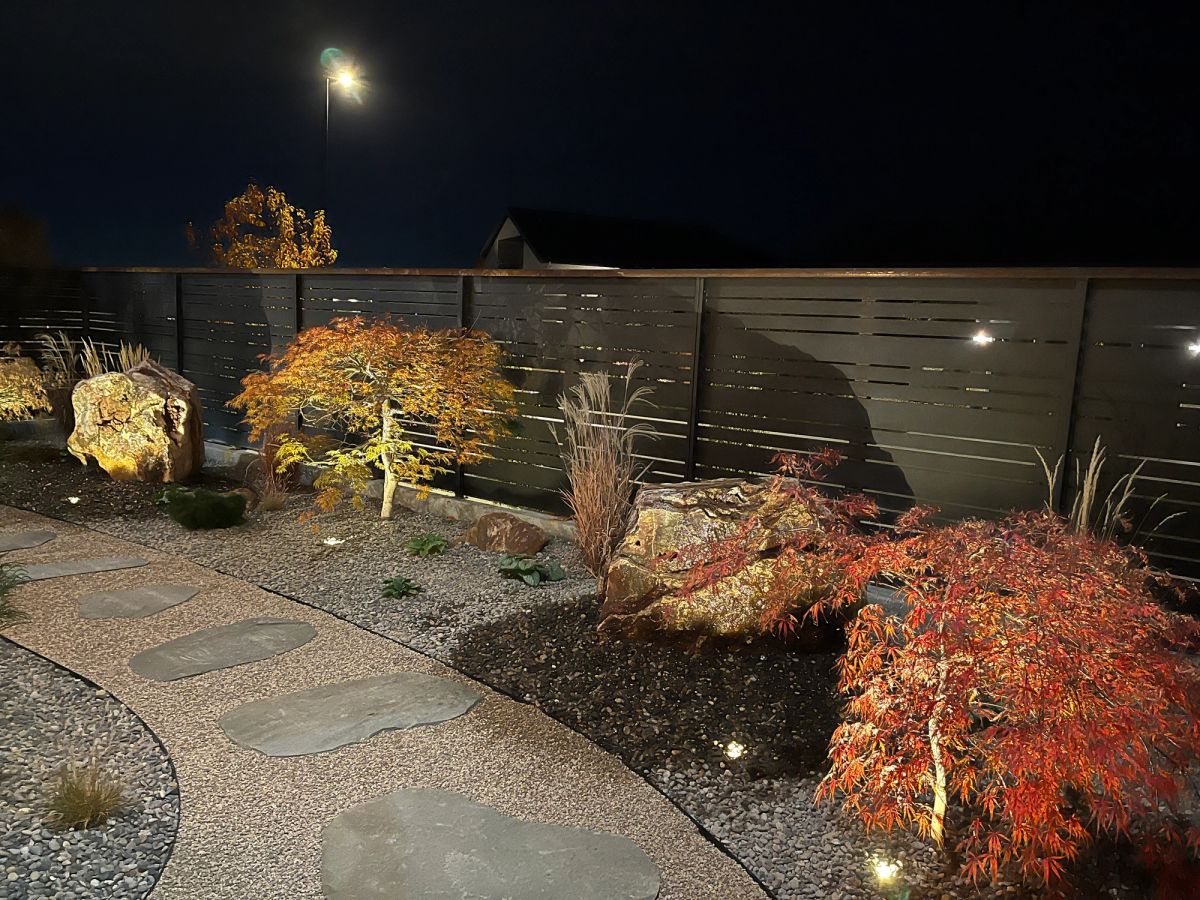
- Outdoor Lighting Integration. A water feature at night is a completely different experience from the same feature in daylight. Underwater lighting illuminates the movement of water from below, creating depth and drama. Perimeter and accent lighting extends the visual interest of the feature into the evening hours when you're most likely to be outside during Boise's warm summers. I work with Hockema's lighting and audio service to integrate water feature lighting seamlessly into the broader outdoor lighting design.
Maintenance: What’s Actually Required
A properly designed water feature is low maintenance, not no maintenance. The difference between a feature that stays beautiful for years and one that becomes a burden is usually the quality of the design and installation, not the homeowner’s effort. Here’s what seasonal care looks like for each type of system.
Spring Startup
For pondless systems: reinstall the pump, refill the reservoir, and run the system to check for any winter damage before full operation. For koi ponds: resume feeding gradually as water temperatures rise above 50°F, begin algae management as sunlight increases, and complete a spring cleanout to remove accumulated organic material from the pond floor and filters. For decorative fountains: inspect the pump, clean the basin, and refill with fresh water.
Summer
Keep up with evaporation by topping off the system as needed — a small autofill valve makes this automatic. Monitor water clarity and treat for algae if the biological balance is disrupted by heavy rain, temperature swings, or excessive organic debris. Clean skimmer baskets and pre-filter media as needed. In a koi pond, monitor fish behavior as a simple indicator of water quality.
Fall
Remove leaves and debris before they break down and add nutrients to the water. Net the pond in late September if your property has heavy leaf fall. Begin reducing koi feeding as water temperatures drop below 60°F, switch to a cold-weather wheat germ formula, and stop feeding entirely below 50°F.
Winter Shutdown
For pondless systems: remove and clean the pump before the first hard freeze, store it in a frost-free location, and the system is done for the season. For koi ponds: maintain an opening in the ice through winter using a pond de-icer or aerator, ensure adequate pond depth for fish to overwinter safely (3 feet minimum in Boise's climate), and do not break ice by striking it — the shockwave can harm fish.
If you’d prefer to hand off seasonal maintenance, I offer spring startup, fall preparation, and annual cleanout services for water features I’ve installed. Ask about this during your consultation.
What Clients Say
Boise
“I can't say enough to do justice for my new zen garden. Thank you, Kabe and Hockema Landscape Design and Build team.”
MW
Melinda W.
Eagle, ID
“Our Dream Backyard Made Easy! We love our backyard. Highly recommend! Thanks Kabe Hockema!”
RR
Randy Root
Eagle, ID
“Five Stars: Exceptional Landscape Vision and Execution. If you are considering a new landscape or a complete redesign, I cannot recommend a more talented and professional team. Their combined expertise delivers nothing short of a five-star result.”
GM
Garrett McCurdy
Water Feature FAQ
Questions we hear most
I design and install pondless waterfalls and streams, koi ponds and water gardens, decorative stone fountains, water walls, and reflecting pools. Every installation is custom designed for the specific property. I don't use pre-packaged kits or one-size approaches. The right feature type depends on your yard size, your maintenance preferences, whether you have young children, and what you want the feature to do for your outdoor space.
A modest pondless waterfall or stream system typically runs $6,000 to $12,000. A larger naturalistic stream or significant pondless installation is $12,000 to $25,000. A koi pond with full filtration, rock work, and aquatic planting ranges from $15,000 to $35,000 and up depending on size and complexity. Decorative stone fountains start lower. The best starting point is a conversation.
A pond has an open water surface. A pondless waterfall delivers the sound and movement of water without one. Water flows over rock into a gravel-filled reservoir basin and is recirculated by a pump back to the top. Pondless systems are easier to maintain, safer for households with young children, and simpler to winterize in Idaho's climate.
A properly designed water feature is genuinely low maintenance. Seasonal care involves spring startup, summer top-offs for evaporation, fall debris management, and winter shutdown. None of this is burdensome. A water feature that becomes a maintenance problem almost always traces back to shortcuts taken at installation.
For pondless systems: remove the pump before the first hard freeze (typically late October in Boise), clean it, and store in a frost-free location. For koi ponds: reduce and then stop feeding as water temperatures drop, maintain an opening in the ice through winter with a de-icer or aerator, and ensure the pond is deep enough for fish to overwinter safely.
Aquatic and marginal plants that perform well in Idaho's climate include water lilies, blue flag iris, yellow iris, rushes, sedges, pickerelweed, and cattails for in-pond planting. At the water's edge: sedges, astilbe, ligularia, and various ferns. I select plants appropriate to the sun exposure, the water depth of each zone, and the overall design aesthetic of the feature.
Yes, reliably. Moving water attracts birds, dragonflies, frogs, and butterflies. A water feature with good aquatic planting creates the most habitat. If wildlife is a goal for your landscape, a naturalistic pond with varied depth zones and marginal planting is the most effective design.
Yes, and the result is often better than either element alone. Underwater lighting transforms a water feature at night. The movement of water illuminated from below creates depth and drama that is genuinely striking. I regularly design water features in combination with patios, fire features, retaining walls, and planting beds.
A professionally designed and installed water feature adds both aesthetic distinction and perceived value to a property. High-quality custom water features are the kind of landscape element that buyers respond to positively and that makes a property memorable compared to others in the same price range.
Aquascape's ecosystem approach relies on biological balance: beneficial bacteria colonizing the rock and gravel media to outcompete algae for nutrients, aquatic plants shading the water surface and consuming nutrients, and adequate filtration removing organic debris before it becomes algae fuel. A properly designed system maintains clarity naturally with minimal chemical intervention.
Size is less about the yard dimensions and more about how the feature will be used and experienced. A small pondless fountain can anchor a patio corner in a modest backyard. A naturalistic stream with a series of falls can traverse a larger property and become its defining feature. I look at the specific site during consultation and give you an honest read on what works.
From the Hockema articles


Let’s chat
Ready to hear the sound of water in your yard?
Let's talk about what's possible on your property. A consultation starts with a conversation — no pressure, no obligation.
Start the Conversation