
Landscaper
Lawn landscaping in Boise, Idaho
Lawn landscaping in Boise, Idaho, sized, shaped and watered for how you actually use your yard. Call Kabe at (541) 961-7269 or schedule a consultation to plan a lawn that stays green without wasting water.
Lawn landscaping in Boise, Idaho, sized, shaped and watered for how you actually use your yard. Call Kabe at (541) 961-7269 or schedule a consultation to plan a lawn that stays green without wasting water.
Lawn landscaping in Boise usually starts with a homeowner telling me something like this: the grass is patchy, the sprinklers hit the fence more than the lawn, and they're not sure they even want this much grass anymore. That's a good place to start. A lawn is the biggest single planting in most yards, and it uses the most water, so it deserves a real plan.
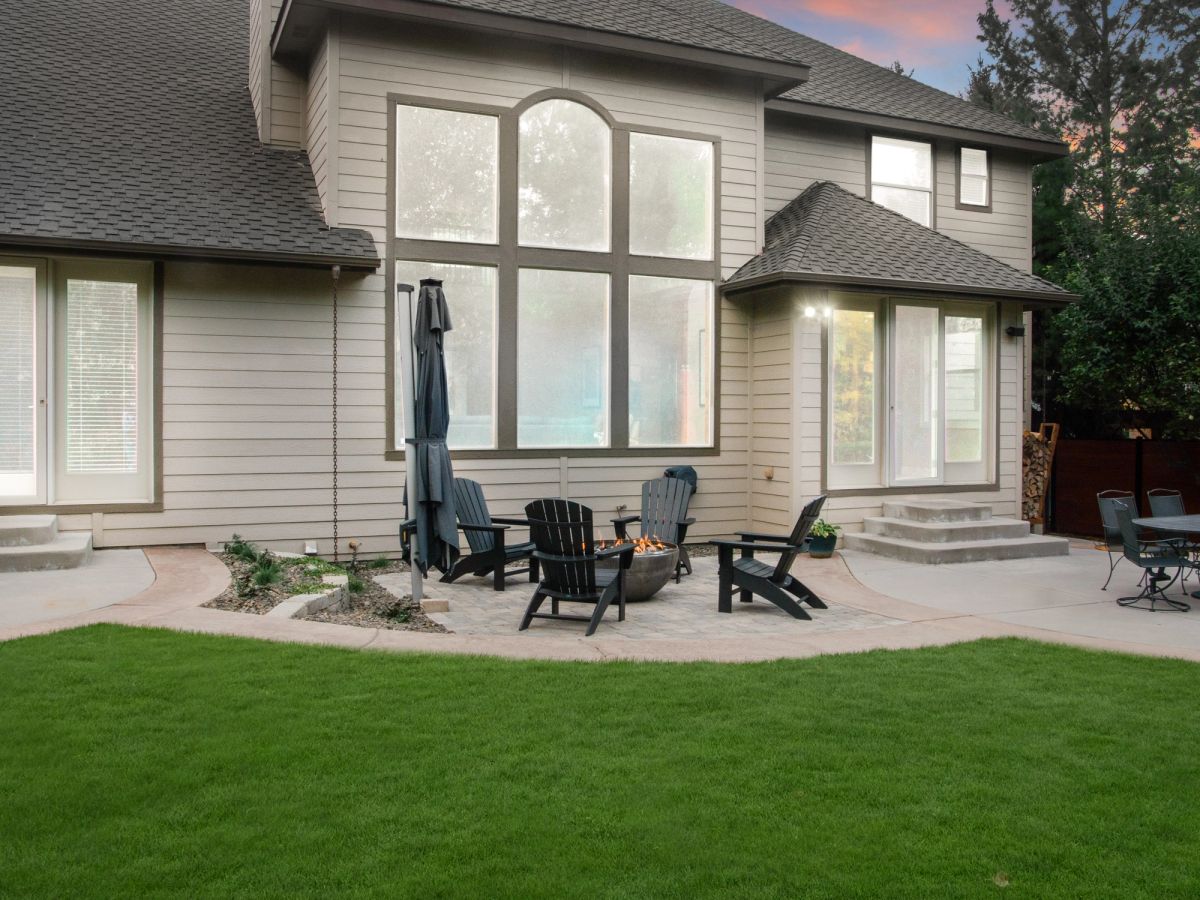
Lawn landscaping means designing the lawn as part of the whole yard, not just covering dirt with grass. I look at how big the lawn should be, what shape it takes, where it meets the beds, how it gets water and what's under it. Then I build it myself, from the first walk around the yard to the last cut edge.
When a lawn needs more than new grass
Some lawns just need new sod. Others keep failing because of something under the surface or along the edges. These are the signs I look for:
- Brown strips along sidewalks and driveways, where the soil bakes and the sprinklers miss
- Soggy low spots that stay wet days after watering
- Thin grass under trees, where shade and roots win every year
- Narrow slivers of lawn that are hard to mow and harder to water
- A lawn much bigger than anyone uses, with a water bill to match
If any of these sound familiar, new grass alone won't fix it. The layout, the soil or the watering has to change too.
How much lawn do you actually use?
This is the first question I ask. Kids, dogs and a place to throw a ball all need real grass. A strip between the sidewalk and the street usually doesn't. A lot of Boise homeowners are cutting back on turf to save water, and I think that's smart when the grass isn't getting used. The goal is a lawn sized for how you live, with the rest of the yard turned into something that needs less water.
When I shrink a lawn, the space doesn't sit empty. It can become shrub and perennial beds like the ones I build for planting and softscapes, a gravel path, or a seating area.
Shape, edges and mowing
A lawn with simple, smooth curves is easier to mow and easier to water. Sprinkler heads throw water in circles and arcs, so a lawn with tight corners and skinny necks always ends up with dry spots or a wet fence. I shape the lawn so the sprinklers can cover it evenly.
Edges matter as much as shape. A firm edge, like a concrete mow strip or a steel or stone border, keeps grass out of the beds and gives the mower wheel a track to ride on. Without one, the line between lawn and bed gets fuzzy within a season.
Getting the ground ready
Soil in the Treasure Valley is often heavy clay, and it's usually alkaline. In newer subdivisions, the yard is often builder fill that equipment packed down hard. Grass roots can't push into that, so they stay shallow, dry out fast in July and take a beating from freeze-thaw winters.
Before any grass goes down, here's what I do:
- Remove the old lawn and weeds instead of covering them up
- Fix the grade so water drains away from the house and doesn't pool in the middle of the yard
- Loosen packed soil and work in compost or topsoil where the ground needs it
- Set or fix the sprinklers before the final smoothing, so nothing gets dug up later
- Rake and roll the surface smooth so the new lawn sits flat
This is the part nobody sees, and it's why one new lawn thrives while the one next door struggles.
Sod, seed or artificial turf
Once the ground is ready, there are three ways to finish it:
- Sod installation gives you a finished lawn right away and holds soil in place on slopes. It costs more up front.
- Grass seeding costs less and works well for big areas, but the new grass needs steady water and some patience while it fills in.
- Artificial turf installation makes sense for small, hard-to-water spots or dog areas where real grass keeps dying.
Watering a lawn in the Treasure Valley
Hot, dry summers and steady wind make watering the make-or-break part of lawn landscaping in Boise. I put the lawn on its own irrigation zone, apart from trees and shrubs, because grass needs water on a different schedule. I space sprinkler heads so their spray reaches the next head over, which keeps the lawn from going brown in rings. In parts of Canyon County, many homes water from an irrigation district or a ditch, and that water can carry sand and debris. A good filter and the right heads make a big difference there.
What drives the cost
- The size of the lawn
- How much old lawn and soil work the ground needs
- Whether the yard needs grading first
- Sod, seed or turf
- Whether the sprinklers are adjusted or redone
- The edging material and how easy the yard is to get into
I give pricing after I've walked your yard and we've talked about what you want from it.
Where I build lawns
I work in Boise first, and I also take lawn projects in Eagle, Meridian, Nampa, Caldwell, Star, Middleton, Kuna, Garden City, Hidden Springs, Sun Valley and Ketchum. Lawn work is one part of my landscaping services in Boise, and it often happens alongside new beds, paths or a patio.
If your lawn needs a rethink and not just a patch, let's look at it together. Schedule a consultation for lawn landscaping in Boise, or call me at (541) 961-7269, Monday to Friday, 8 a.m. to 6 p.m.
More landscaper services
- Artificial turf installation
- Concrete masonry
- Desert landscaping
- Driveway landscaping
- Driveway or walkway paving
- Garden decorating
- Garden design
- Grading & resloping
- Grass seeding
- Green landscaping
- Hardscaping
- Hydroseeding
- Landscape installations
- Landscape management
- Outdoor step construction
- Outdoor water feature design
- Pool landscaping
- Retaining walls
- Rock landscaping
- Sod installation
- Stone landscaping
- Stone masonry
- Tree landscaping
- Walkway landscaping
- Yard drainage
- Yard grading
- Yard landscaping
Lawn landscaping is part of my landscaper services in Boise.
Lawn landscaping questions
Yes. The space you take out of lawn becomes planting beds, a path, gravel or a seating area, so it looks planned instead of empty. I design the new lawn shape and the areas around it at the same time.
Sod gives you a usable lawn right away and works better on slopes. Seed costs less and is a good fit for large areas, but it needs steady water while it grows in. I'll tell you which one fits your yard after I see it.
Concrete heats up in the summer and dries out the soil next to it. Those strips are also where sprinklers often miss. Better head placement, better soil or a different material in that strip usually solves it.
Not always. Sometimes the existing system just needs heads moved or replaced so the spray covers the new lawn shape. If the lawn is changing size or shape a lot, I'll usually redo that zone.
It depends on the size of the lawn, how much soil prep and grading it needs, sod versus seed, and sprinkler work. I give a real number after a consultation, once I've seen the yard.

Let's chat
Let's talk about your vision
If you're ready to create a space that's personal, timeless, and built to last, I'd love to hear what you're imagining. Let's start with a low-pressure conversation and see if we'd be a good fit to work together.
Schedule a Consultation