
Outdoor Living
Outdoor kitchens built for Boise winters
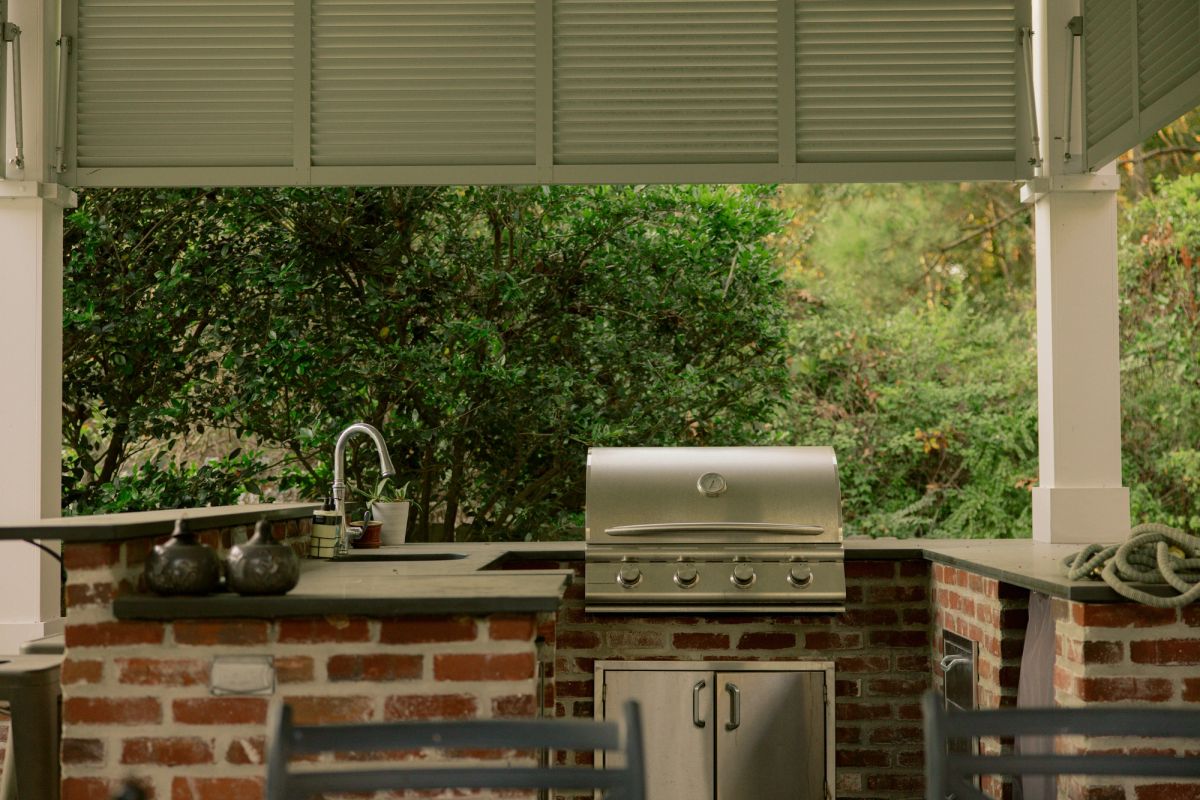
From a built-in grill island to a full kitchen with a sink and bar seating, planned around how you actually cook and entertain.
From a built-in grill island to a full kitchen with a sink and bar seating, planned around how you actually cook and entertain.
More than a grill on a countertop
Layout, the utilities under the patio, materials that survive freeze-thaw, and what an outdoor kitchen costs in Boise.
Outdoor kitchens are one of the most requested additions to Boise properties, and one of the most often designed poorly. A good one is a working kitchen: enough counter to prep on, the grill where smoke won't drift into the house, a sink so you're not walking every dish inside, and utilities that make it through a Treasure Valley winter. I design kitchens as part of the whole outdoor living space, so the cooking area works with the dining, lounge and fire areas around it.
Start with how you cook
Before any countertop gets sized, I ask how you entertain. Weekend grilling with family is a different design from hosting dinner for twenty. The most common mistake is copying a layout from a magazine instead of designing to how you use it. A few things hold for almost every kitchen:
- Landing space on both sides of the grill for platters and tools
- Separate areas for hot (grill, side burner), wet (sink), cold (refrigerator) and prep
- The cook facing the guests or the view, not a fence
- Close enough to the house to carry food out, far enough that smoke stays out of open windows
The infrastructure you don't see
Gas
A natural gas line has to be planned and installed before the countertops and appliances go in. Retrofitting later is significantly more expensive. Gas work is done by a licensed plumber or gas line contractor, typically under a City of Boise permit, and I coordinate it as part of the project. Propane is an option for simpler builds, with the tank stored in a ventilated cabinet.
Electrical
Refrigerators, outlets, task lighting and outdoor audio all need power. Running conduit during construction is inexpensive. Adding it later means trenching through a finished patio or opening up the island. I plan for more capacity than you think you need, and coordinate it with the landscape lighting for the rest of the yard.
Water that survives the winter
A sink makes an outdoor kitchen dramatically more usable, but in Boise every outdoor water line has to be designed for winter. I lay out the supply and drain with accessible shut-off valves and low points, so the whole system can be drained before the first hard freeze. A line that can't be drained is a cracked pipe waiting for January.
Running conduit during construction is inexpensive. Adding it later means trenching through a finished patio.
Materials that survive freeze-thaw
Indoor materials don't automatically work outside, and Boise's temperature swings find every weakness.
- Frames: stainless steel or powder-coated aluminum, or concrete block clad in stone, brick or stucco. Not wood.
- Countertops: granite is durable and heat-resistant, porcelain handles heat and freeze-thaw very well, and poured concrete works with proper sealing and upkeep. Avoid marble outdoors. It stains easily and doesn't handle freeze-thaw.
- Appliances: marine-grade stainless rated for outdoor use. Indoor appliances corrode fast outside.
- Ventilation: gas islands need vent panels so leaking gas can't collect inside the cabinet, and grills set into anything combustible need the manufacturer's insulated jacket.
What an outdoor kitchen costs in Boise
A basic built-in grill with a small counter and storage typically runs $8,000 to $15,000 installed. A full outdoor kitchen with a gas grill, refrigerator, sink, side burners, bar seating and an overhead structure ranges from about $25,000 to $60,000 or more. Appliance choices, countertop material, and whether gas, electrical and plumbing have to be run from scratch move the number the most. Our article on what to plan for in a Boise outdoor kitchen goes into more detail.
What usually goes with it
A kitchen needs a solid floor, usually a paver or natural stone patio built on a proper base so the island doesn't settle. Many clients pair it with a fire pit or outdoor fireplace nearby, so the evening moves from dinner to the fire without anyone going inside.
Plan the menu, then the appliances
The grill is the anchor, but what you like to cook decides the rest. A family that grills burgers twice a week needs a different kitchen than someone who smokes brisket all day or wants to make pizza for friends on Friday nights. I ask about your menu early, because every appliance changes the size of the island and the utilities behind it.
- Built-in gas grill: the core of almost every outdoor kitchen. Size it for how many people you usually cook for, not the biggest party of the year.
- Side burner or griddle: for sauces, breakfast and anything that would fall through the grates.
- Smoker: a pellet or kamado smoker can be built into the island or set on its own landing next to it. They need clearance from combustible materials and a spot where the smoke drifts away from seating.
- Pizza oven: wood-fired or gas, either freestanding or built into a masonry base. A pizza oven is heavy, so it needs a proper footing, and it becomes a focal point, so placement matters.
- Refrigeration: an outdoor-rated refrigerator, beverage center or ice maker saves trips into the house more than any other amenity.
- Storage and trash: access doors, drawers and a pull-out trash bin keep the counter clear and the kitchen usable.
Layouts that work
Most outdoor kitchens fall into a few shapes. A straight island along one side of the patio is the simplest and fits smaller back yards. An L-shaped island adds a second run of counter for prep or bar seating and wraps naturally around a corner of the patio. A U-shape gives the cook the most room and works for serious entertaining, but it needs a larger patio to avoid feeling closed in.
Bar seating changes the experience. A raised bar at about 42 inches with a 12-inch overhang lets guests sit and talk while the cook works, and it hides the cooking clutter from the rest of the patio. Standard counter height, about 36 inches, is more comfortable for prep. Many kitchens use both: counter height on the cook side and a raised bar facing the guests.
Countertops and finishes
Outdoor countertops deal with sun, heat from the grill, spills and Treasure Valley winters. The common options:
- Granite: the most proven outdoor choice. It handles heat and freeze-thaw, and a honed or leathered finish shows less glare in direct sun than polished.
- Porcelain slab: very durable, stain resistant and UV stable, with a huge range of looks, including stone and concrete patterns.
- Quartz: popular indoors, but many quartz products aren't rated for outdoor use and can discolor or fade under UV. If you love quartz, it needs to be a product the manufacturer specifically approves for exterior installation, ideally under a cover.
- Poured concrete: customizable in shape and color, but it needs sealing and can develop hairline cracks over time.
The island itself can be finished in natural stone veneer, stacked stone, stucco, brick or porcelain panels. I usually tie the finish to the house, a nearby retaining wall or a fire feature so the whole patio reads as one design. Stainless steel access doors and drawers rated for outdoor use complete it and resist rust.
Sun, shade and weather
A Boise summer afternoon can be well over 90 degrees, and a west-facing kitchen with no shade is miserable to cook in at dinnertime. I look at where the sun sits in the evening, which way the wind usually blows and where smoke will drift before placing the grill. Shade can come from a pergola, a solid patio cover, the house itself or trees planted for the long term. Covered kitchens also protect countertops and appliances from weather, which adds to their longevity and makes the kitchen usable during spring showers.
Kitchens next to a pool
A pool and an outdoor kitchen belong together, but they need some separation. Keep the grill far enough from the water that wet feet and hot cooking surfaces don't share a walkway, and use slip-resistant pavers on the path between them. A bar facing the pool lets whoever is cooking keep an eye on the kids. Our poolside backyard renovation shows how a pool area and the rest of the yard can be planned as one space.
Comfort beyond cooking
The kitchens people actually use are part of a complete outdoor room. A dining table within a few steps of the counter, a fire pit or fireplace for after dinner, task lighting over the grill and landscape lighting for the paths all make the space comfortable well after sunset. Planting around the patio softens all that stone and gives the kitchen some privacy from the neighbors.
Outdoor kitchens around the Treasure Valley
I build outdoor kitchens in Boise and across the valley. In newer subdivisions in Meridian and Nampa, back yards are often smaller and HOA rules may cover structures and materials, so a compact island and a smart layout go a long way. On larger lots, there's room for a full kitchen, a separate dining area and a fire feature. For more on budgeting and planning, read outdoor kitchens in Boise: what to plan for.
Hockema Landscape Design & Build is an Idaho licensed contractor (license 6871843), bonded and insured. I design each kitchen myself, coordinate the licensed gas, electrical and plumbing trades, and stay on site through construction.
Outdoor kitchen questions
A basic built-in grill with a small counter and storage runs about $8,000 to $15,000 installed. A full outdoor kitchen with a grill, refrigerator, sink, side burners, bar seating and an overhead structure ranges from about $25,000 to $60,000 or more.
Gas line work, electrical and plumbing each require separate permits in Boise. The kitchen island itself typically doesn't, unless it includes a covered roof structure. I coordinate permitting as part of the project.
If the house has natural gas, a permanent line is the better long-term choice: no tanks to swap and no running out mid-cook. Propane costs less to set up and makes sense when the kitchen is far from the gas meter or the budget is tight.
The water lines get shut off and drained before the first hard freeze, and the grill gets covered. Follow the manufacturer's cold-weather guidance for the refrigerator. With outdoor-rated materials and a drainable water system, the kitchen itself sits through a Boise winter without damage, and many people keep grilling all year.
Granite and porcelain slab are the most reliable choices in Idaho because they handle heat, UV and freeze-thaw. Many quartz products aren't rated for outdoor use and can fade in direct sun, so quartz only makes sense if the manufacturer approves it for exterior installation.
Yes. Both work well in an outdoor kitchen, but they need to be planned from the start. A pizza oven needs a solid footing and the right clearances, and a smoker needs a spot where smoke drifts away from the seating area.
A compact grill island can fit on a modest patio, as long as there's counter space on both sides of the grill and room to walk behind the cook. Larger L- or U-shaped kitchens with bar seating need more patio, plus space for a nearby dining table.
A well-built outdoor kitchen adds usable living space and is one of the amenities buyers notice. The bigger return is how much you'll use it. A kitchen designed around how you cook and entertain gets used several nights a week from spring through fall.
Portfolio
Recent Projects
Outdoor living spaces we've designed and built across the Treasure Valley.


Let's chat
Thinking about an outdoor kitchen?
Tell me how you cook and entertain, and roughly what you want to spend. I'll lay out what fits your space and what has to go in under the patio first.
Schedule a Consultation