
Water Features
A living pond that changes with the seasons
Koi ponds and water gardens designed and built for Boise winters, across the Treasure Valley.
Koi ponds and water gardens designed and built for Boise winters, across the Treasure Valley.
The most alive thing in a landscape
Koi pond or water garden, what Boise winters demand, how ponds stay clear, and the honest tradeoffs.
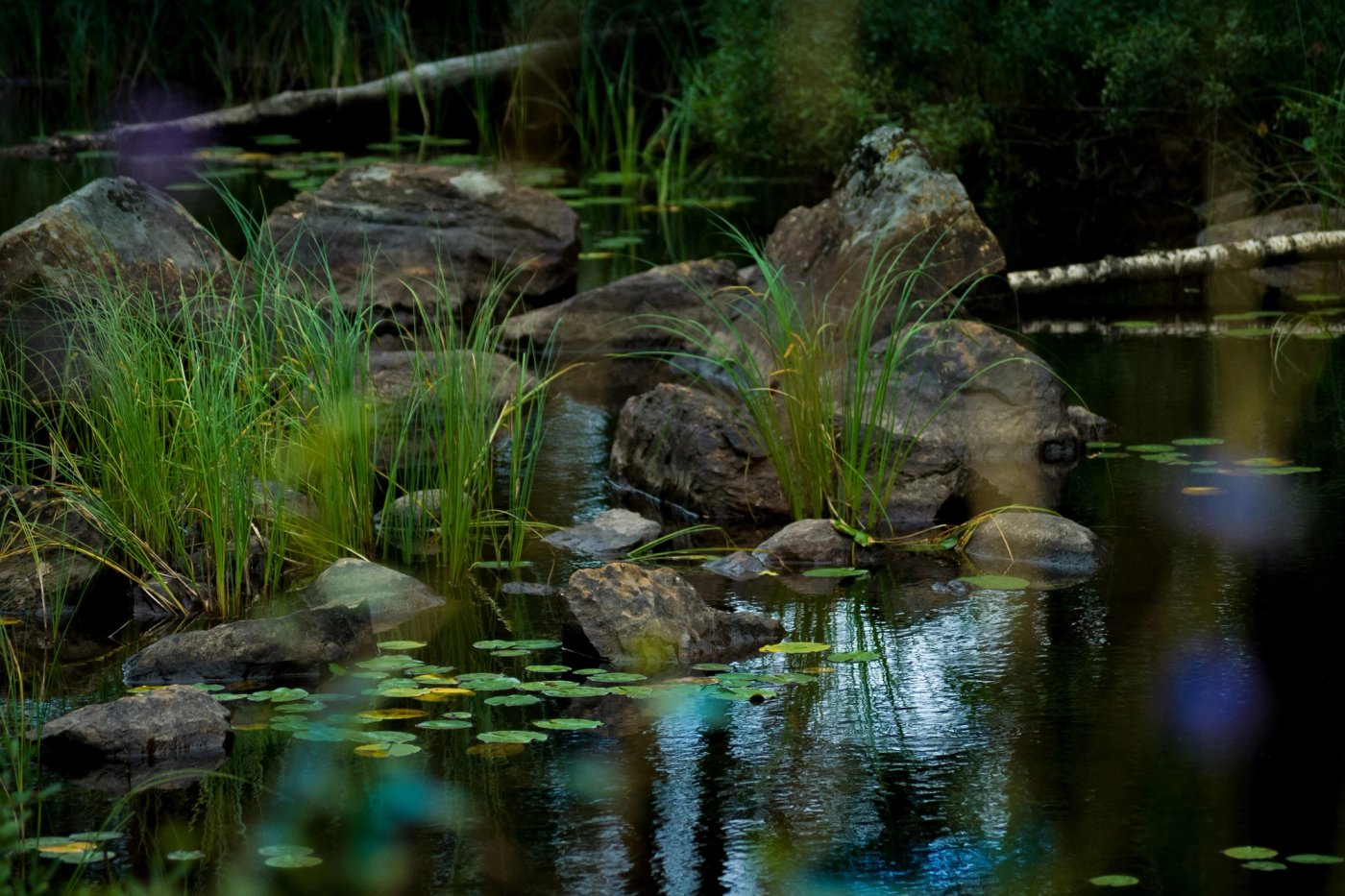
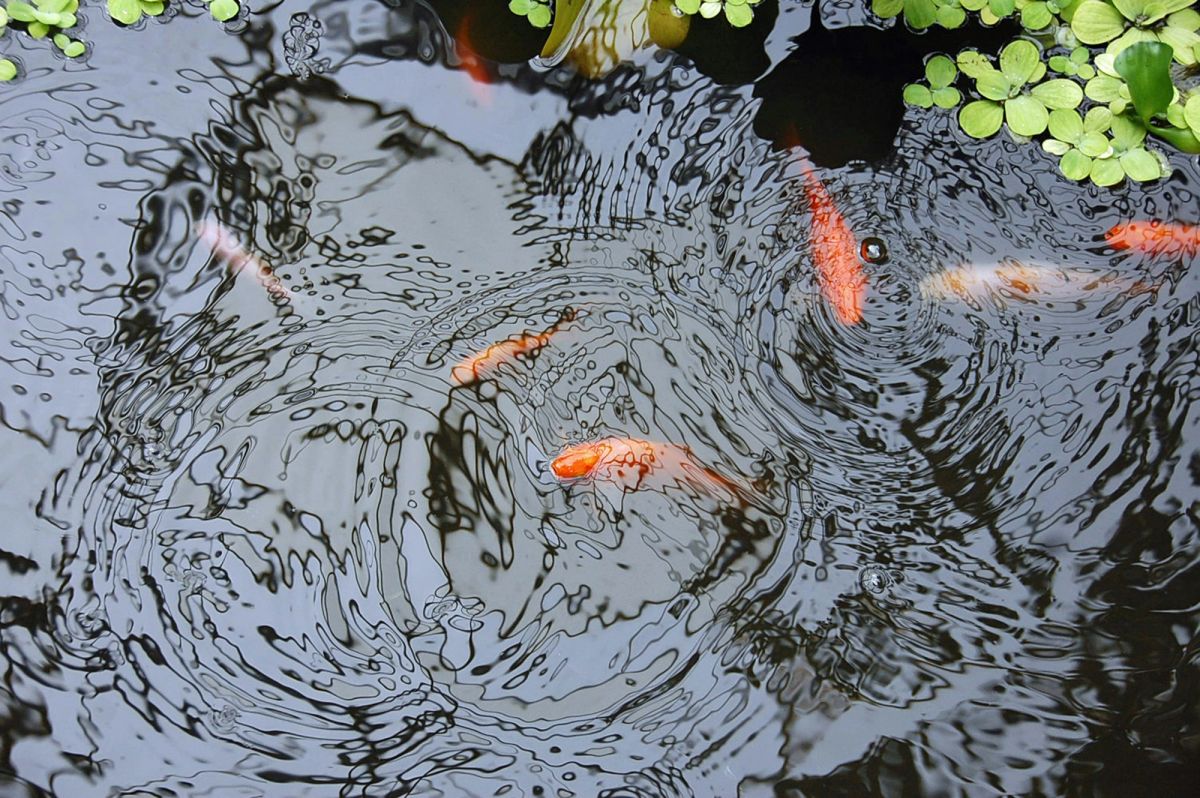
A well-built pond is the most alive thing you can add to a landscape: moving water, water lilies, fish, and the sky reflected back at you, all changing through the seasons. Koi develop personalities over time and become part of the garden. A pond is also more of a commitment than any other water feature I build, so I'll be straight with you about what it takes in Boise's climate.
Koi pond or water garden
A water garden is a planted pond where the plants are the point. It can be garden-scale, around 50 to 100 square feet, and fish are optional. A koi pond is built around the fish: deeper, usually larger, with filtration sized for the load koi put on the water. Larger ponds can run several hundred square feet and become the defining feature of a property. Most ponds include a waterfall or stream for sound and circulation.
Built for Boise winters
Depth is the first decision. Koi need at least 3 feet of water to overwinter here, ideally 4 or more. At that depth the bottom stays above freezing even when the surface is iced over. A shallower pond can't safely hold koi through a Boise winter, and the fish have to come inside.
In Boise, a koi pond needs at least 3 feet of depth, ideally 4 or more, for fish to overwinter safely.
Winter care follows the water temperature. Cut back feeding below 60°F and switch to an easily digested wheat germ food, then stop feeding entirely below 50°F. Keep a small opening in the ice all winter with a pond de-icer or aerator so gases can escape, and never break ice by striking it, because the shock can injure or kill fish. Every pond I build comes with a clear winterization protocol, and our water feature winterization guide covers the full process.
Clear water comes from design, not chemicals
A healthy pond is a small ecosystem. I build around the ecosystem approach Aquascape popularized: a skimmer and mechanical filtration catch debris before it breaks down, beneficial bacteria in the rock and gravel process waste, and plants compete with algae for nutrients. In a koi pond, that biological system is what keeps the fish healthy. Siting matters as well. A pond exposed to constant wind behaves differently from a sheltered one, so orientation is part of every design.
Plants and wildlife
In the water, I use plants like water lilies, blue flag iris, rushes, sedges and pickerelweed, along with submerged oxygenating plants. At the edge, sedges, astilbe, ligularia and ferns soften the transition to the garden. One plant I don't use is yellow flag iris: it's sold as a pond plant but it's on Idaho's noxious weed list. A well-planted pond draws songbirds, dragonflies and frogs on its own.
The honest tradeoffs
Open water is a real safety concern with young children. Ponds also take more ongoing care than any other water feature: algae management, fish care, spring startup and fall shutdown, netting in late September if you have heavy leaf fall, and periodic cleanouts. If that sounds like more than you want, a pondless waterfall gives you the sound and movement of water with far less upkeep.
What a koi pond costs in Boise
A koi pond with full filtration, rock work and aquatic planting typically ranges from $15,000 to $35,000 and up, depending on size and complexity. Smaller water gardens can come in lower. Our comparison of pond vs. pondless water features can help you decide which fits.
Hockema Landscape Design & Build is an Idaho licensed contractor (license 6871843), bonded and insured, with 15 years of experience building landscapes across the Treasure Valley.
Koi pond questions
At least 3 feet, and ideally 4 feet or more. At that depth the water near the bottom stays above freezing through winter, so koi can overwinter safely outdoors.
Yes, if the pond is 3 to 4 feet deep and properly prepared. Stop feeding when the water drops below 50°F, keep an opening in the ice with a de-icer or aerator, and run an aerator rather than the main pump through winter.
A koi pond with full filtration, rock work and aquatic planting typically ranges from $15,000 to $35,000 and up, depending on size and complexity.
Good filtration design and plenty of plants, not constant chemical treatment. Mechanical filtration removes debris, beneficial bacteria process waste, and aquatic plants compete with algae for nutrients. Clearing leaves before they break down helps too.
Open water is a real concern with young children. For many families, a pondless waterfall is the better choice until the kids are older, since it has no open water surface.
Portfolio
Recent Projects
Landscapes we've designed and built across the Treasure Valley.


Let's chat
Thinking about a pond?
Tell me what you picture, fish or no fish, and roughly what you want to spend. I'll walk the yard with you and give you an honest read on what a pond will take.
Schedule a Consultation