

Outdoor Living
Fire pits and fireplaces that extend the season
Gas and wood-burning fire pits, fire bowls and outdoor fireplaces for patios across Boise and the Treasure Valley.
Gas and wood-burning fire pits, fire bowls and outdoor fireplaces for patios across Boise and the Treasure Valley.
Fall nights you'd otherwise spend inside
Fire pit or fireplace, gas or wood, the materials that make it safe, and what a fire feature costs in Boise.
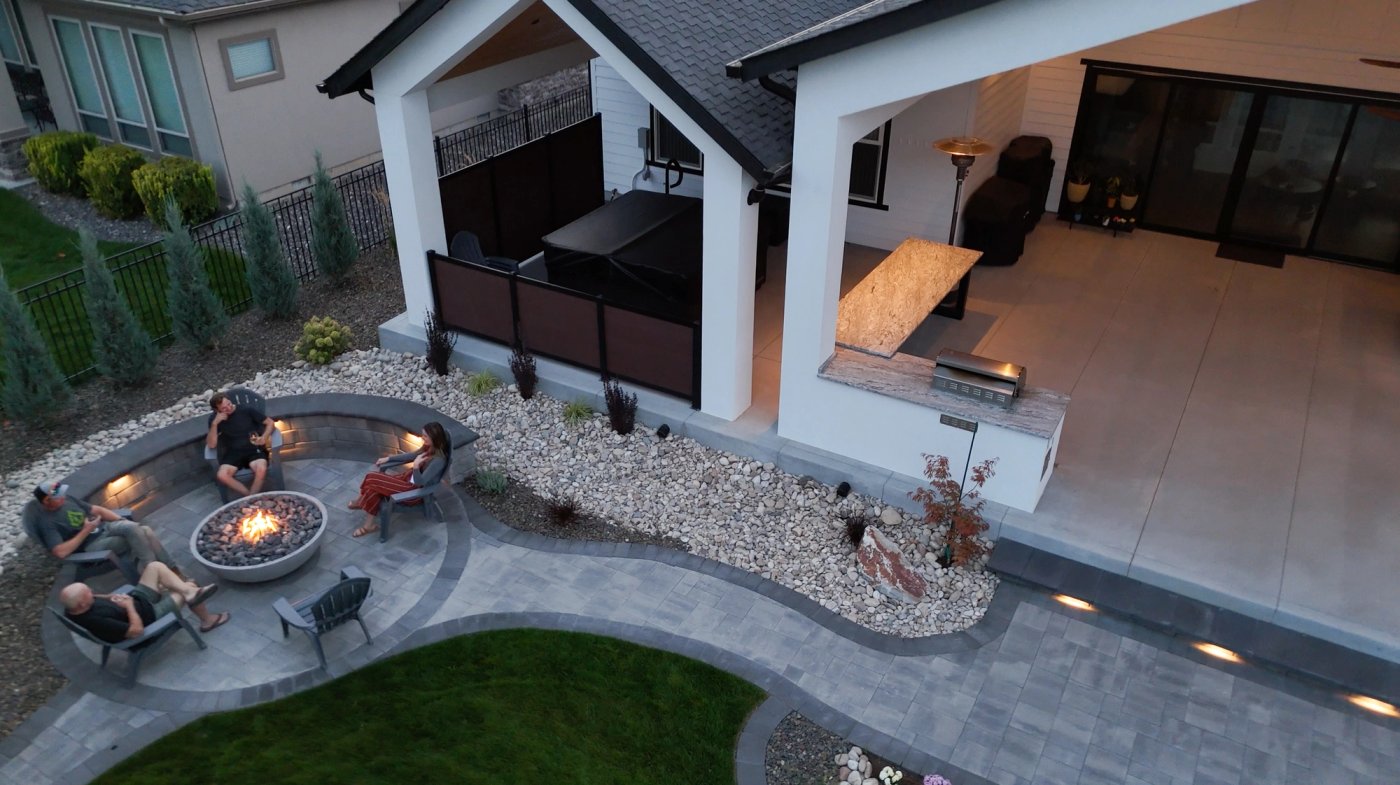
Boise evenings cool off fast after sunset, even in summer. A fire feature turns those evenings, and most of September and October, into time spent outside. It's also one of the most-used pieces of any outdoor living space I build. Getting it right comes down to three choices: what kind of feature, what fuel, and where it sits.
Fire pit or outdoor fireplace
A fire pit is a gathering feature. Seating surrounds it on all sides, and it works at almost any scale, from a small backyard to a large entertaining patio. A fire bowl is a raised version that doubles as a sculptural piece. An outdoor fireplace is a focal point. Seating faces it rather than circling it, which gives the space a more formal, room-like feel. Fireplaces work best where there's already a defined outdoor room, like a covered patio or pergola. Standing alone in an open yard, they can feel isolated.
For most Boise homes where the main use is family gathering, a well-designed gas fire pit built into the patio seating area gives the most value. Our comparison of fire pits vs. outdoor fireplaces in Boise goes deeper on the tradeoffs.
Gas or wood
Gas is push-button fire: no smoke, no ash, no wood to buy and store, and a clean, consistent flame. Wood gives you the smell, the crackle and the campfire feel that gas can't match, along with smoke that follows the wind. Boise has residential burn restrictions that change with the season and with air quality, and gas features generally aren't subject to the same restrictions as wood. If you're set on wood, check current City of Boise fire rules before we design around it.
For most Boise homes, a gas fire pit built into the patio seating gives the most value.
How I build them
Fire-rated materials only
Wood-burning pits get a firebrick or steel liner inside the decorative surround. Ordinary block and landscape stone can crack and spall when they're heated over and over. River rock is the classic mistake: stones from a creek bed hold moisture and can crack or burst in a fire. Gas features use lava rock or fire glass over a properly sized burner, with a safety shutoff and a gas line run by a licensed contractor under permit.
Drainage
Rain and snowmelt that sit in a fire pit ruin burners and rust steel. Every pit I build drains, either through the base into gravel or out through the patio's drainage, so water never pools inside.
Placement and clearances
A fire feature needs distance from the house, roof overhangs, fences and tree branches. Manufacturer clearances for gas units and local fire code set the minimums, and I design to whichever is stricter. Fire under a covered patio takes extra planning for venting and ceiling clearance, so that gets settled before the roof goes up. I also look at prevailing evening wind, so smoke from a wood fire drifts away from the seating and the neighbors.
Seating
Built-in seat walls at chair height make a fire pit feel finished and add seating without adding furniture. They're often part of the same wall work that levels the patio. I leave enough room between the seat and the fire for legs and a walkway, so nobody is too close to the flame or squeezing past.
What a fire feature costs in Boise
- Built-in gas fire pit with a simple surround: about $3,000 to $6,000
- Larger custom gas fire pit with natural stone and integrated seating: about $8,000 to $15,000 or more
- Prefabricated firebox with a natural stone or stucco surround: about $5,000 to $12,000
- Built masonry outdoor fireplace: about $8,000 to $20,000
Running a new gas line, the distance from the meter, and the patio or walls around the feature can add to those numbers.
Part of the whole space
A fire feature usually sits on a paver or stone patio, within a short walk of an outdoor kitchen, with low-voltage lighting on the paths and steps around it so people can get to it safely after dark. Planning them together means one gas line, one trench and one design.
Natural gas, propane or wood
Once you've decided between gas and wood, gas has its own choice: natural gas or propane. They burn the same way at the burner. The difference is the supply.
Natural gas
If your house already has natural gas, a buried line from the meter gives you unlimited fuel and the convenience of never swapping a tank. It costs more up front because of trenching and the licensed gas fitter, and the price climbs with distance from the meter. For a permanent fire pit or fireplace that gets used often, natural gas is usually the better long-term choice.
Propane
Propane works where there's no gas service or where running a line would be expensive. A standard tank hides in an enclosure built into the fire pit surround or a nearby seat wall, with an access door for swapping it out. The tradeoff is that a tank runs out, usually at the worst moment, so it suits fire features that get occasional use.
Wood-burning
Wood gives you the crackle, the smell and real heat, and some people won't have it any other way. Plan for firewood storage, ash cleanup and smoke drifting toward guests or neighbors depending on the wind. Wood fires are also the ones affected by burn restrictions and air quality alerts. Charcoal and cooking over a fire pit are possible with the right grate, but most clients who want to cook outside end up adding a grill instead. For a side-by-side comparison, see fire pits vs. outdoor fireplaces.
Sizing a fire pit and the space around it
Size is where a lot of fire pits go wrong. Too small and it feels like an afterthought. Too big and guests can't reach across it for conversation, or they get pushed back by the heat. Most residential fire pits work best with an inside diameter of roughly 36 to 44 inches, with the outer wall a little wider depending on the surround.
The bigger decision is the layout around it. Plan about 7 feet from the fire to the back of the seating so chairs can push back from the heat, plus a clear walking path behind them. A round fire pit suits a circular patio and a group conversation. A long linear fire feature fits a modern design and works well in front of a sectional or along a seat wall. I lay out the fire feature, seating and walking paths together so friends and family can move through the space without stepping around chairs.
Designs, materials and colors
A fire feature is usually the focal point of the patio, so it should match the rest of the hardscape. Common designs include:
- Segmental block surrounds that match a retaining wall or seat wall, for a clean, consistent look.
- Natural stone veneer or stacked stone, for warmth and texture that pairs with flagstone patios.
- Brick, for traditional homes and a classic masonry look.
- Smooth stucco or concrete panels with a flat cap, for a modern, minimal design.
Gas fire features add another layer of choice: lava rock, fire glass in different colors, or ceramic logs and stones that give a gas fire a more natural look. The cap matters too. A wide, smooth cap gives people a place to set a drink and turns the pit edge into part of the conversation.
Rules, regulations and safety
Fire features in the Treasure Valley are governed by a mix of local regulations: city fire codes, HOA covenants and seasonal burn restrictions. Wood-burning fires are the most regulated, and on poor air quality days they may be off limits entirely. Gas fire features are typically treated differently, though the gas line itself needs a permit and a licensed installer. Before design, I check what applies to your address so the fire feature you plan is one you can actually use.
Safety is built in through clearances from the house, fences and trees, fire-rated materials inside the burn area, a shutoff valve within reach on gas units, and a stable, noncombustible surface around the pit. I don't build fire features on wood decks or against structures, and I don't let a nice view override a safe distance.
Planning the utilities and surface
The best time to plan a fire feature is before the patio goes in. Gas lines, electrical conduit for lighting or an igniter, and drainage all run under the surface, and adding them later means cutting into finished work. A fire pit sits on the same compacted base as the rest of a paver patio, so it won't settle away from the pavers around it. Low-voltage landscape lighting along the seat walls and paths finishes the ambiance and keeps the space safe after the fire dies down.
Fire pits can also go where there's no patio at all. A gravel fire pit area with a stone ring and Adirondack chairs is a simpler, lower-cost option that fits a casual back yard or the edge of a lawn. Grass right up to a fire pit is the version I steer people away from, because it scorches, gets trampled and turns to dirt within a season.
Using a fire feature through the seasons
In Boise, a fire feature earns its keep in spring and fall, when afternoons are pleasant and evenings drop off fast. A well-placed fire pit can add weeks of outdoor time on each end of the season, and a gas unit makes a quick fire easy on a weeknight. In our Caldwell outdoor living room, an outdoor fireplace and a fire pit share one patio, so the space works for a quiet morning or a group in the evening. For winter, gas burners should be covered when not in use, and wood pits should be cleaned out so ash and water don't sit in the bowl through freeze-thaw.
Hockema Landscape Design & Build is an Idaho licensed contractor (license 6871843), bonded and insured, with 15 years of experience building outdoor spaces across the Treasure Valley.
Fire pit and fireplace questions
Yes. Boise has residential burn restrictions that vary by season and with air quality. Gas fire pits are generally not subject to the same restrictions as wood-burning features. Always check current City of Boise guidelines before using a wood-burning fire pit.
For most Boise homes, gas. It lights with a switch, makes no smoke or ash, and is generally less affected by burn restrictions. Wood is the right call if the smell and crackle of a real fire matter most and the site handles smoke well.
A built-in gas fire pit with a simple surround runs about $3,000 to $6,000. A larger custom gas fire pit with natural stone and integrated seating runs about $8,000 to $15,000 or more. Outdoor fireplaces run about $5,000 to $20,000 depending on whether they're prefabricated or built masonry.
Often, yes. A gas fire pit can usually be added if the patio is in good shape and a gas line can reach it without too much disruption. A wood-burning pit on pavers needs a proper liner and enough clearance below so heat doesn't damage the pavers. I'll look at the patio and tell you which options make sense.
If you have natural gas at the house and plan to use the fire pit often, a natural gas line is usually worth it: no tanks to refill and no running out mid-evening. Propane makes sense where gas service isn't available or the run from the meter would be long and expensive.
For most homes, an inside diameter of about 36 to 44 inches works well. Leave roughly 7 feet from the fire to the back of the seating so people can sit comfortably and move their chairs back from the heat.
It depends on the fuel, local code, and the manufacturer's requirements for gas units, and wood fires generally need more distance than gas. Overhangs, fences, trees and HOA rules all factor in too. I check the requirements for your address during design.
On a wood-burning pit, yes, with a cooking grate. Gas fire pits are designed for flame and warmth, not cooking, and food drippings can damage the burner. If cooking outside is a priority, an outdoor kitchen with a built-in grill near the fire pit usually works better.
Portfolio
Recent Projects
Outdoor living spaces we've designed and built across the Treasure Valley.


Let's chat
Ready for a fire feature?
Tell me how you picture using it and where it might go. I'll help you choose between a fire pit and a fireplace, gas and wood, and show you how it fits the rest of the yard.
Schedule a Consultation