Landscaper
Desert landscaping in Boise, Idaho
Desert landscaping in Boise with high desert plants, rock and drip irrigation that handle hot summers and hard freezes. Schedule a consultation to plan a yard that looks good in August without daily watering.
Desert landscaping in Boise with high desert plants, rock and drip irrigation that handle hot summers and hard freezes. Schedule a consultation to plan a yard that looks good in August without daily watering.
Desert landscaping in Boise starts with a fair question: why fight to keep a thirsty lawn alive in a place that's naturally high desert? A lot of homeowners call me after another summer of brown patches, big water bills and mowing grass nobody walks on. They want a yard that looks good in August without daily watering. That's what desert landscaping is: a yard built around plants, rock and soil that fit our dry climate. I'm Kabe Hockema, and I design and build these yards myself.
Boise is high desert, not low desert
When people hear desert landscaping, they often think of saguaro cactus and white gravel. That's a low desert look, and most of those plants would die in a Boise winter. We're in the high desert. Summers are hot and dry, but winters bring hard freezes, snow and wind. A plant here has to take a 100 degree afternoon in July and a single digit night in January. That changes everything about plant choice, and it's why a yard copied from Arizona tends to fail here.
The better model is what already grows in the foothills above town: sagebrush, rabbitbrush, bunchgrasses and wildflowers that bloom in spring and rest through the heat.
Plants that take heat and hard freezes
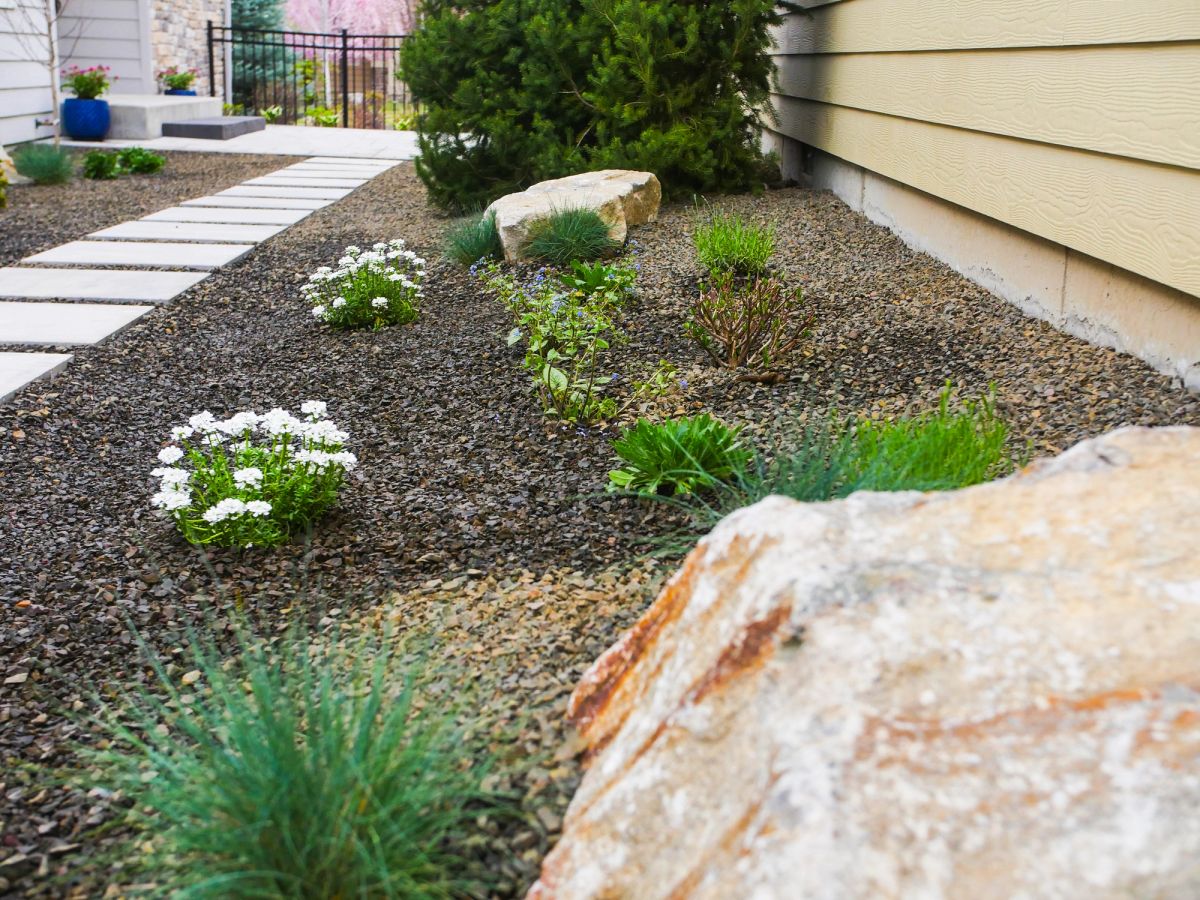
I pick plants for the exposure (how much sun and wind a spot gets), the soil and how you use the yard. Some that tend to do well in Boise desert yards:
- Penstemon, yarrow and blanket flower for color
- Russian sage, lavender and catmint along walks and patios
- Rabbitbrush and sagebrush for a native look
- Ornamental grasses for movement and winter texture
- Yucca and cold hardy prickly pear for structure
- Shade trees that handle dry summers, placed to cool the house and the rock around it
The goal is a yard with something going on in every season, not a flat field of gravel.
Rock, gravel and boulders
Rock is the backbone of a desert yard, and the choices matter. Crushed gravel packs down and works well for paths. Rounded river rock looks right in a dry creek bed. Decomposed granite, a fine crushed stone, makes soft, walkable areas. Large boulders anchor beds and break up flat ground. My rock landscaping page covers rock work in more depth.
I watch for two things. First, a big sheet of rock in full sun throws heat back at the house, so I mix in plants and shade. Second, rock over bare clay still grows weeds. I prep the soil, use landscape fabric where it makes sense, and lay the rock deep enough to block light.
Soil and water still matter
Desert plants don't want rich garden soil. Many Boise yards have heavy, alkaline clay, which holds water around roots and can rot plants that like it dry. I loosen the soil, add grit where it helps drainage, and sometimes build low mounds called berms so roots sit above wet ground.
New plants still need water for their first year or two while their roots spread. I install drip irrigation, small tubes that put water right at each plant, instead of spray heads. Once plants settle in, many need very little. Drip also stops the waste you get from sprinklers misting rock and sidewalks.
Replacing a lawn with a desert yard
Turf reduction is one of the most common reasons people call. The work usually goes like this:
- Kill or strip the grass so it doesn't come back up through the rock
- Cap or convert the old sprinkler zones
- Fix the grade so water moves away from the house
- Shape beds, berms and paths
- Run drip lines and set boulders
- Plant, then lay rock or mulch
Some families keep a small patch of grass or add artificial turf installation where kids or dogs play. Others want a fully low-water yard, which is the idea behind my xeriscaping and green landscaping work.
What changes the cost
The price of desert landscaping in Boise depends more on the yard than the style. The main drivers are:
- Size of the area and how much lawn has to come out
- Rock type and how many tons it takes
- Boulder size, since big ones need equipment
- Number and size of plants
- Drip irrigation and changes to the old sprinkler system
- Grading, soil prep and access to the backyard
I lay all of that out at a consultation so you can decide where to spend.
Where I build desert yards
I'm based in Boise and work across the Treasure Valley, including Eagle, Meridian, Nampa, Caldwell, Star, Middleton, Kuna, Garden City and Hidden Springs. Up in Sun Valley and Ketchum, the same ideas apply with an even colder winter. You can see all of my services on the landscaper page.
If you're ready to trade a thirsty lawn for desert landscaping in Boise that fits the climate, schedule a consultation or call (541) 961-7269.
More landscaper services
- Artificial turf installation
- Concrete masonry
- Driveway landscaping
- Driveway or walkway paving
- Garden decorating
- Garden design
- Grading & resloping
- Grass seeding
- Green landscaping
- Hardscaping
- Hydroseeding
- Landscape installations
- Landscape management
- Lawn landscaping
- Outdoor step construction
- Outdoor water feature design
- Pool landscaping
- Retaining walls
- Rock landscaping
- Sod installation
- Stone landscaping
- Stone masonry
- Tree landscaping
- Walkway landscaping
- Yard drainage
- Yard grading
- Yard landscaping
Desert landscaping is part of my landscaper services in Boise and is also listed under landscape designer.
Desert landscaping questions
They overlap. Xeriscaping is a set of water saving ideas that can still include some lawn and leafy plants. Desert landscaping leans into the dry look, with rock, boulders and plants from dry places. Both cut water use in Boise.
Some, especially the first year. Good soil prep, the right depth of rock and fabric in the right spots cut weeds a lot. A quick pull in spring and fall usually keeps them under control.
Yes, at first. New plants need regular drip watering for their first year or two while the roots grow. After that, many get by on very little, with a deeper soak during the hottest weeks.
A large area of bare rock in full sun can reflect heat toward the house. I balance rock with plants, mulch and shade trees. When I can, I keep the biggest rock areas away from west and south walls.
Yes. Many yards keep a small, easy to water lawn for kids or pets and turn the rest into desert beds. It's a good way to cut water use without losing a place to play.

Let's chat
Let's talk about your vision
If you're ready to create a space that's personal, timeless, and built to last, I'd love to hear what you're imagining. Let's start with a low-pressure conversation and see if we'd be a good fit to work together.
Schedule a Consultation