Landscaper
Concrete masonry in Boise, Idaho
Concrete masonry in Boise for block walls, seat walls, planters, steps and outdoor kitchen bases, built on footings below the frost line. Schedule a consultation and I'll look at your site myself.
Concrete masonry in Boise for block walls, seat walls, planters, steps and outdoor kitchen bases, built on footings below the frost line. Schedule a consultation and I'll look at your site myself.
Concrete masonry in Boise covers a lot of the solid, built parts of a yard: block walls, seat walls, raised planters, columns, steps, and the cores of outdoor kitchens and fire pits. Most people call me with a simple version of the problem. They want a wall or a structure that looks clean and stays straight, and they've seen plenty of leaning, cracked ones around town. I'm Kabe Hockema. I design and build concrete masonry myself, and the part I care about most is the part you never see once it's done.
What counts as concrete masonry
Masonry means building with units set in a pattern. In concrete masonry, those units are made of concrete. There are three main kinds I work with in yards:
- Concrete block. You may hear it called CMU, short for concrete masonry unit. These are the hollow gray blocks. The cores get rebar and grout (a soupy concrete) to make the wall strong, and the outside gets stone veneer, stucco or a cap.
- Segmental retaining wall block. These are solid blocks that stack without mortar and lock together. Each row sets back a little so the wall leans into the hill. They're common for retaining walls and terraced beds.
- Concrete pavers and caps. These cover patios, walks and the tops of walls.
Concrete block or natural stone?
Both have a place. Block usually costs less than natural stone, comes in even sizes, and builds fast and square. It's the right core for an outdoor kitchen island or a fire pit, because it's strong and easy to cover. Natural stone has more color and character, and every piece is different. A common middle ground is a block wall with a stone veneer face, which gives you the look of stone over a strong core. If you want stone all the way through, my stone masonry page covers that work.
It starts below the ground
A footing is a strip of poured concrete under a mortared wall. It spreads the weight and keeps the wall from moving. In the Treasure Valley, that footing has to sit below the frost line, the depth the ground freezes to in winter. If it doesn't, the soil under it freezes and thaws, the footing lifts, and cracks show up in the wall above. Segmental block walls sit on a different base: a trench of compacted crushed rock that lets the wall flex a little without cracking.
Water is the other big issue. Soil behind a wall gets heavy when it's wet, and our clay soil holds water. A retaining wall needs drain rock behind it and a perforated pipe at the bottom to carry water out. Without that, pressure builds every spring until the wall bows.
How a block project goes
- Consultation. I look at the site, the soil and the slope, and we talk about what you want the wall or structure to do.
- Design. I settle the height, length and finish, and check whether the wall needs an engineered design or a permit. Taller walls and walls that hold up a driveway or a building often do.
- Layout and dig. I mark the lines, call for utility locates and dig the footing or base trench.
- Footing or base. Concrete goes in with rebar, or crushed rock gets compacted in layers, depending on the wall type.
- Build. The first course (the bottom row) has to be dead level, because every row above follows it. I take my time there, then build up, filling cores and backfilling with drain rock as I go.
- Finish. Caps, veneer or stucco go on, and the soil and plants come back around the base.
How Boise winters treat masonry
Freeze-thaw cycles are hard on anything that holds water. Water gets into small gaps, freezes, expands and pushes them a little wider each year. Good drainage, caps that shed water, and properly filled joints all help. De-icing salt is rough on concrete surfaces, so I ask where snow will be shoveled and what you plan to put on steps and walks. Sprinklers that hit a wall every night leave white mineral stains and keep the masonry wet, so I aim heads away from walls or switch nearby beds to drip.
What drives the cost
Every masonry job is priced on its own scope. The main factors are:
- Length and height of the wall or structure
- How deep the footing needs to go and how much digging it takes
- Whether the wall holds back soil and needs drainage, grid or engineering
- The finish: plain block, split face, stone veneer or stucco
- Caps, corners, curves and steps
- Access for equipment and materials
Masonry as part of the whole yard
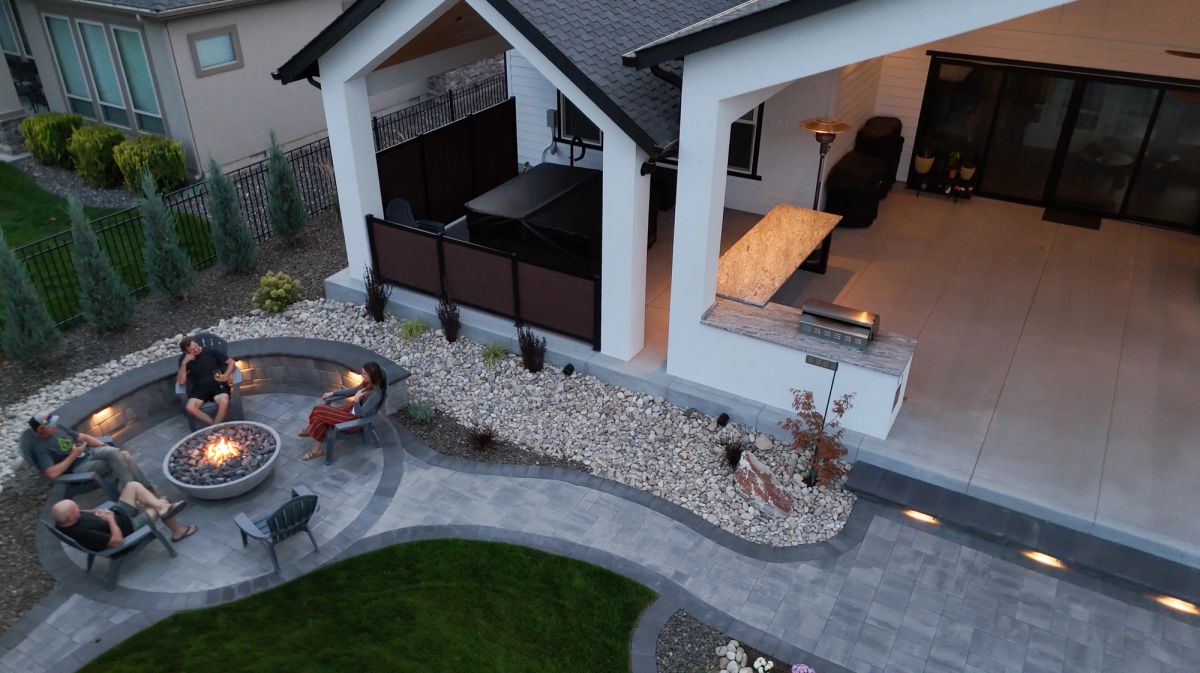
Concrete masonry usually supports something else. A seat wall frames a patio. Block steps join two levels, which my outdoor step construction page goes into. A block island becomes the base for one of my outdoor kitchens. Because I also design the plantings and hardscape, the masonry gets planned with everything around it. You can see related work on my landscaper page.
Where I build
I build concrete masonry in Boise and around the valley: Eagle, Meridian, Nampa, Caldwell, Star, Middleton, Kuna, Garden City and Hidden Springs, plus Sun Valley and Ketchum. I've been landscaping since 2012, I hold Idaho contractor license #6871843, I'm bonded and insured, and I'm on site for every job.
If you're planning a wall, planter or kitchen base and want concrete masonry in Boise that stays straight, schedule a consultation or call (541) 961-7269.
More landscaper services
- Artificial turf installation
- Desert landscaping
- Driveway landscaping
- Driveway or walkway paving
- Garden decorating
- Garden design
- Grading & resloping
- Grass seeding
- Green landscaping
- Hardscaping
- Hydroseeding
- Landscape installations
- Landscape management
- Lawn landscaping
- Outdoor step construction
- Outdoor water feature design
- Pool landscaping
- Retaining walls
- Rock landscaping
- Sod installation
- Stone landscaping
- Stone masonry
- Tree landscaping
- Walkway landscaping
- Yard drainage
- Yard grading
- Yard landscaping
Concrete masonry is part of my landscaper services in Boise and is also listed under landscape designer.
Concrete masonry questions
Concrete masonry uses manufactured concrete units, like block, pavers and caps, that come in even sizes. Stone masonry uses natural stone, cut or split, where every piece is different. Many walls use both: a concrete block core with a stone face.
It depends on the height, what the wall holds back and where it sits on the lot. Taller retaining walls and walls near property lines or buildings often need a permit or an engineered design. I check this during design, before any digging.
Most cracks come from what's under or behind the wall. A footing that's too shallow moves with freeze-thaw, and soil that can't drain pushes on the wall when it's wet. Getting the footing depth and drainage right prevents most of it.
Often, yes, if the wall is sound and sits on a solid footing. Stone veneer adds weight, so I check the wall first. If it's leaning or cracked, it needs to be fixed or rebuilt before it gets a new face.

Let's chat
Let's talk about your vision
If you're ready to create a space that's personal, timeless, and built to last, I'd love to hear what you're imagining. Let's start with a low-pressure conversation and see if we'd be a good fit to work together.
Schedule a Consultation