Landscaper
Driveway or walkway paving in Boise, Idaho
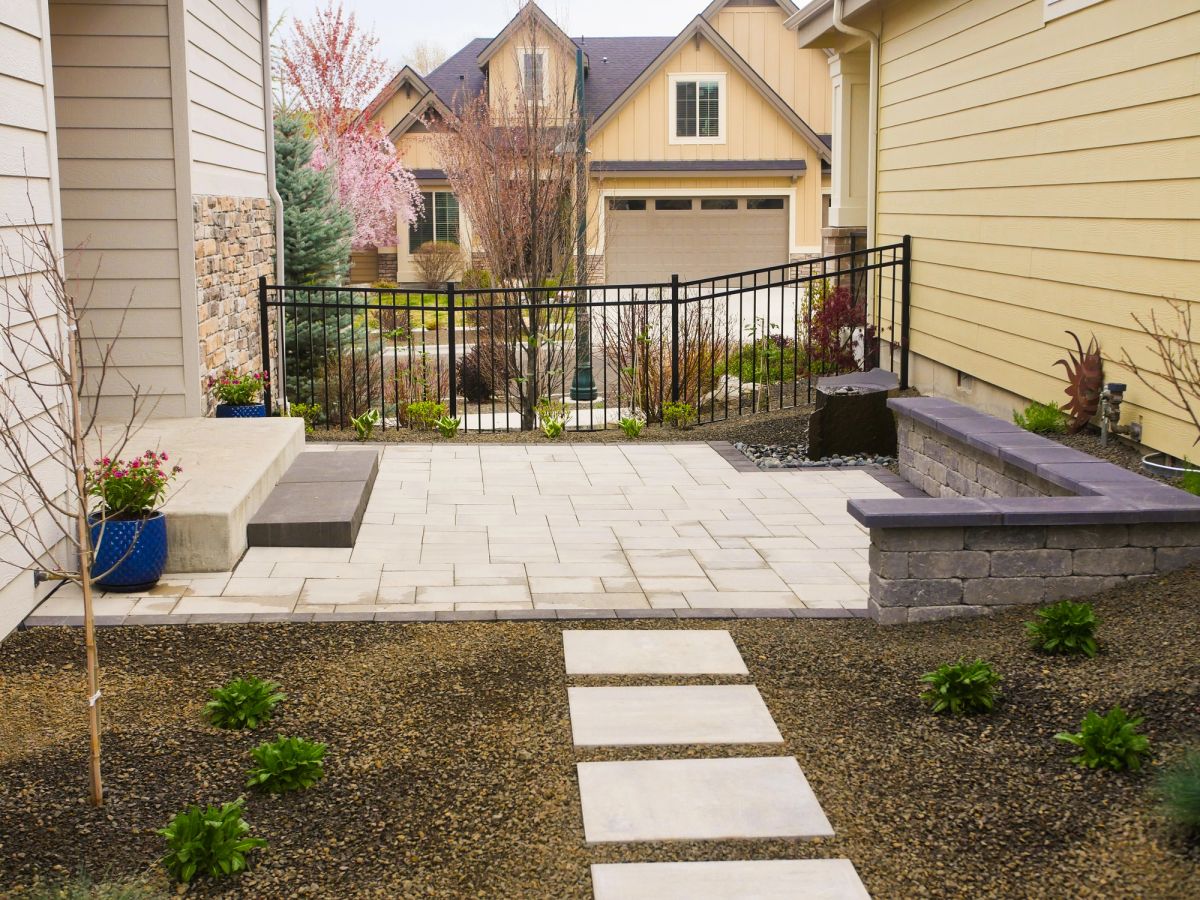
Driveway or walkway paving in Boise with pavers and stone set on a deep, compacted base. Schedule a consultation and I'll check what's under your current drive or path before we plan anything.
Driveway or walkway paving in Boise with pavers and stone set on a deep, compacted base. Schedule a consultation and I'll check what's under your current drive or path before we plan anything.
Driveway or walkway paving in Boise usually comes up for one of two reasons. Either the old concrete has cracked, sunk and heaved until it trips people, or you're building something new and want it to look better than a gray slab. A paved drive or path carries a lot of weight and weather, so the way it's built under the surface decides how long it lasts. I'm Kabe Hockema. I build paver and stone driveways and walkways myself, and most of the job is the part you'll never see.
Pavers, stone or concrete
Here's how the common choices compare:
- Concrete pavers. Individual units set on a compacted base with sand in the joints. They come in many colors and shapes, handle freeze-thaw well because the joints let them flex, and can be lifted and reset if something settles.
- Natural stone. Flagstone or cut stone for walkways and entries. It has more character, and it costs more. Thin flagstone is better for foot traffic than for cars.
- Poured concrete. Often lower cost up front. But when it cracks, the fix is a patch or a new slab. You can't swap out one piece.
For a lot of homeowners, pavers hit the best balance of looks, strength and easy repair. My paver patios page shows how I handle paver work on a patio scale.
Why driveways and walkways fail
Most paving failures start in the base, not the surface:
- Thin base. Pavers laid on a couple of inches of sand over dirt will rut and sink.
- Poor compaction. Base rock dumped in and packed all at once leaves soft spots underneath.
- No edge restraint. Without a solid edge, pavers creep outward and the joints open up.
- Water underneath. Water that can't drain freezes in winter and pushes the surface up. That's called frost heave.
- Roots. Trees planted too close lift slabs and pavers over time.
How I build a paver driveway or walkway
- Layout and digging. I mark the shape, call for utility locates and dig to the needed depth. A driveway gets a deeper base than a walkway because it holds up cars.
- Subgrade. I compact the native soil at the bottom of the dig. On soft clay, I lay geotextile fabric, a woven sheet that keeps base rock from pushing down into the mud.
- Base rock. Crushed rock goes in thin layers, called lifts. I wet and compact each one before the next goes on. This is where most of the time goes.
- Slope. The surface gets a gentle fall so water runs to the street or a drain, not toward the garage or the house.
- Bedding sand and pavers. A thin, screeded layer of sand goes down, then the pavers in the pattern you chose. Patterns like herringbone hold up better under turning tires.
- Edges and joints. I set the edge restraint, cut the borders clean, compact the pavers into the sand, and sweep in polymeric sand, a joint sand that hardens when wet and resists weeds and ants.
Where a walkway changes levels, I build steps into it. My outdoor step construction page covers how those are built to stay level.
Clay, frost and snow shovels
Treasure Valley ground has its own quirks. Clay soil swells when wet and shrinks when dry, so the base has to be deep and well drained to stay put. Freeze-thaw cycles test every soft spot all winter long. In new subdivisions, builder fill can look solid but hide pockets of loose soil, so I compact it before building on it.
Snow removal matters too. Pavers handle shovels and snow blowers fine when they're set tight in a smooth pattern. I ask clients about de-icing salt, since some products are rough on concrete surfaces over time.
If your drive meets the street, changes to the apron or curb cut may need a permit from the city or the highway district. I'll flag that early so it doesn't hold up the job.
What sets the price
Driveway or walkway paving in Boise is priced on the scope of each job:
- Square footage and shape
- Tear-out and haul-off of old concrete
- Base depth, since driveways need more
- Paver or stone choice and pattern
- Borders, curves, steps and cuts
- Drainage fixes and access for equipment
Where I build
I build paved driveways and walkways in Boise, Eagle, Meridian, Nampa, Caldwell, Star, Middleton, Kuna, Garden City and Hidden Springs, plus Sun Valley and Ketchum. Once the paving is in, the beds around it are the next step. See driveway landscaping and walkway landscaping, or browse all my landscaper services.
If you want driveway or walkway paving in Boise that's built to stay flat, schedule a consultation or call (541) 961-7269. I'll look at what's under your current surface and tell you what it needs.
More landscaper services
- Artificial turf installation
- Concrete masonry
- Desert landscaping
- Driveway landscaping
- Garden decorating
- Garden design
- Grading & resloping
- Grass seeding
- Green landscaping
- Hardscaping
- Hydroseeding
- Landscape installations
- Landscape management
- Lawn landscaping
- Outdoor step construction
- Outdoor water feature design
- Pool landscaping
- Retaining walls
- Rock landscaping
- Sod installation
- Stone landscaping
- Stone masonry
- Tree landscaping
- Walkway landscaping
- Yard drainage
- Yard grading
- Yard landscaping
Driveway or walkway paving is part of my landscaper services in Boise and is also listed under landscape designer.
Driveway or walkway paving questions
For many homes, yes. Pavers flex with freeze-thaw instead of cracking, and a damaged paver can be lifted and replaced. Poured concrete often costs less up front, but repairs are harder to hide.
Yes, when the base is built for it. Driveways need a deeper compacted base than walkways, and the paver thickness and pattern matter. Herringbone patterns lock together better under turning tires.
It's a joint sand mixed with a binder that hardens after it gets wet. It keeps sand from washing out, slows weeds and keeps ants from tunneling. It has to go in dry and be swept clean, or it can leave a haze on the pavers.
I usually don't recommend it. Cracked or heaved concrete has a problem underneath, and pavers on top will follow it. Tearing it out lets me fix the base and set the right slope.
It depends on the city and how much changes. Work on the apron, the curb cut or anything in the public right-of-way may need a permit from the city or highway district. I check this before we start.

Let's chat
Let's talk about your vision
If you're ready to create a space that's personal, timeless, and built to last, I'd love to hear what you're imagining. Let's start with a low-pressure conversation and see if we'd be a good fit to work together.
Schedule a Consultation