Landscaper
Driveway landscaping in Boise, Idaho
Driveway landscaping in Boise that handles hot concrete, snow piles and sprinkler overspray. Schedule a consultation and I'll plan beds, borders and lighting that make the way to your door look finished.
Driveway landscaping in Boise that handles hot concrete, snow piles and sprinkler overspray. Schedule a consultation and I'll plan beds, borders and lighting that make the way to your door look finished.
Driveway landscaping in Boise is about the strips and beds that line the way into your home. For most houses, the driveway is the first thing people see, and the ground next to it is often the worst part of the yard. Grass dies along the hot concrete. Sprinklers soak the drive and leave stains. Snow gets piled on the same shrubs every winter until they give up. If that sounds like your front yard, it can be fixed. I'm Kabe Hockema, and I design and build driveway landscaping myself, from the first sketch to the last plant.
Why driveway edges struggle
The ground beside a driveway is a tough place to grow anything. Concrete soaks up sun all day and gives off heat into the evening, so plants next to it bake. The soil along the edge is often builder fill, packed hard during construction with little topsoil on top. Cars, bikes and trash cans roll over the corners. Then winter adds shoveled snow and de-icing salt. Most driveway beds fail for one of these reasons, not because the owner did something wrong.
Plan for how you use it
Before I pick a single plant, I look at how the driveway gets used:
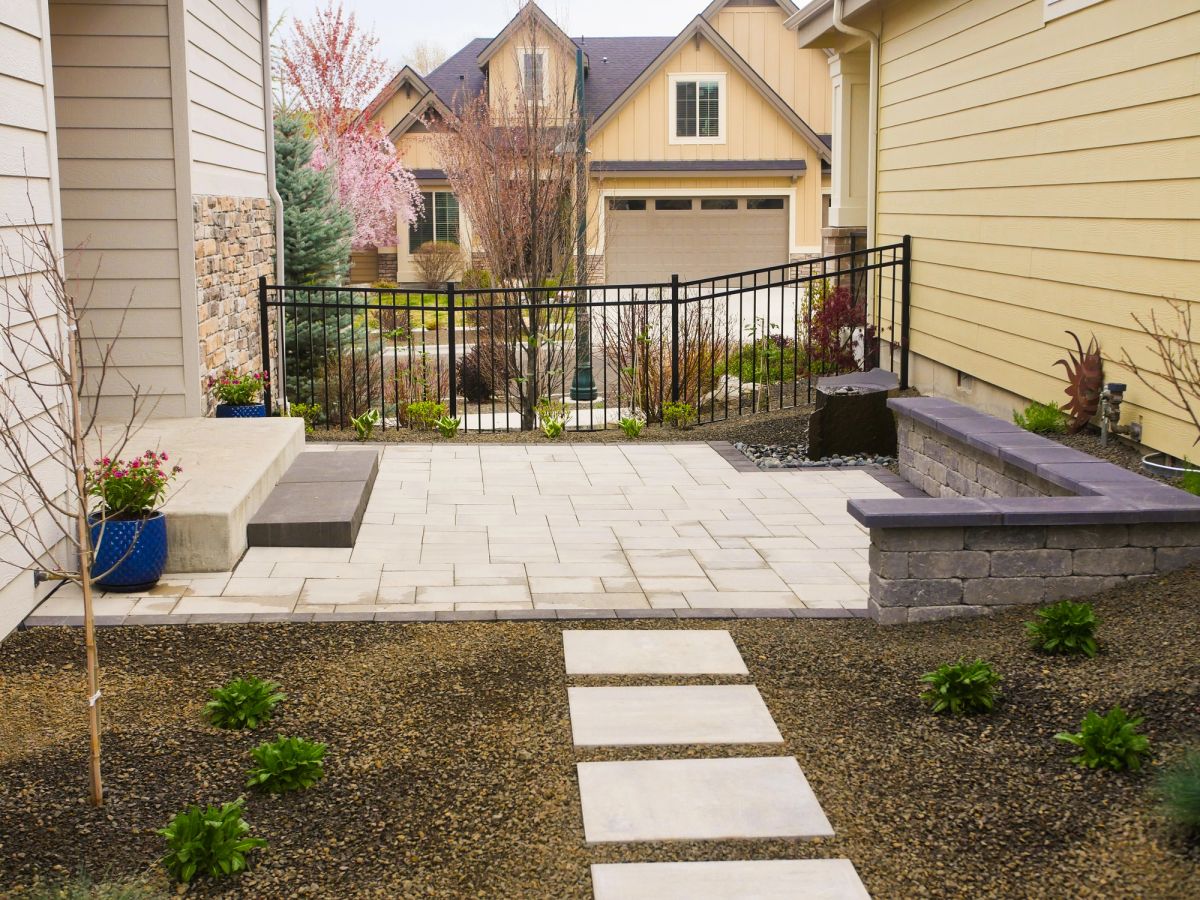
- Step-out space. People need somewhere to put their feet when they get out of the car. A strip of pavers, flagstone or packed gravel along the side keeps them out of the plants.
- Trash and recycling. The cans need a flat spot to sit and a clear path to the curb.
- Sight lines. Plants near the street should stay low so you can see kids, bikes and traffic when you back out.
- The walk to the door. If guests cut across the lawn from the drive, the yard needs a real path. That's where walkway landscaping comes in.
Plants and materials that hold up
Along the hot edge, I use tough, low-water plants that like heat: ornamental grasses, low shrubs, and perennials like penstemon and catmint. Plants that stay a set size beat ones that need constant trimming off the concrete. I keep anything thorny or messy, like trees that drop fruit or sap, away from where cars park.
Rock is often the right choice for the first foot or so next to the slab. It handles heat, salt, snow piles and the odd tire better than any plant. My rock landscaping page covers the options. A defined border, like a steel edge or a paver band, keeps rock off the drive and mulch in the beds.
Snow, salt and winter
In Boise, the snow off your driveway has to go somewhere. I ask where you pile it and plan that spot on purpose, with rock or tough grasses that can be buried for a few days and bounce back. De-icing salt washes into the soil and burns roots, so I keep salt sensitive plants back from the edges. If you use a snow blower, I make sure there's nothing along the edge for it to chew up.
Sprinklers and runoff
Spray heads next to a driveway waste a lot of water. They mist the concrete, leave mineral stains and can leave the drive slick on a cold morning. I usually switch driveway beds to drip irrigation, which puts water right at the roots and keeps the concrete dry.
Runoff matters too. Water from the driveway should drain toward the street, not into the garage or toward the foundation. If the drive sheds water into a low bed that stays soggy, I may regrade the bed or add a small dry creek bed to carry it. If the driveway itself is cracked or sinking, that's a paving job first, and I cover it on my driveway or walkway paving page.
Lighting the way in
Low path lights along the drive help at night, especially on a dark street. A couple of uplights on a tree or the front of the house add warmth and help guests find the door. I run the wire before the plants go in so nothing has to be dug up later. You can read more about my landscape lighting work.
What shapes the cost
Driveway landscaping in Boise can be a small refresh or part of a full front yard rebuild. The cost depends on:
- Length of the driveway and the size of the beds
- How much old lawn, rock or shrubs need to come out
- Soil prep, especially on hard builder fill
- Rock, boulders and plant sizes
- Drip irrigation changes
- Edging, step-out pavers and lighting
Where I work
I design and install driveway landscaping in Boise and nearby cities: Eagle, Meridian, Nampa, Caldwell, Star, Middleton, Kuna, Garden City and Hidden Springs, plus Sun Valley and Ketchum. See the rest of my landscaper services for related work.
If the strip along your drive is the part of the yard you'd rather not look at, schedule a consultation for driveway landscaping in Boise, or call me at (541) 961-7269.
More landscaper services
- Artificial turf installation
- Concrete masonry
- Desert landscaping
- Driveway or walkway paving
- Garden decorating
- Garden design
- Grading & resloping
- Grass seeding
- Green landscaping
- Hardscaping
- Hydroseeding
- Landscape installations
- Landscape management
- Lawn landscaping
- Outdoor step construction
- Outdoor water feature design
- Pool landscaping
- Retaining walls
- Rock landscaping
- Sod installation
- Stone landscaping
- Stone masonry
- Tree landscaping
- Walkway landscaping
- Yard drainage
- Yard grading
- Yard landscaping
Driveway landscaping is part of my landscaper services in Boise and is also listed under landscape designer.
Driveway landscaping questions
Heat loving, low-water plants do best: ornamental grasses, penstemon, catmint, lavender and low shrubs. Pick plants that stay a set size so they don't spill onto the concrete. A rock strip right next to the slab helps too.
Rock is usually better in the first foot or so next to the drive. It doesn't blow away, it handles snow and salt, and it won't wash onto the concrete. Wood mulch works well farther back in the beds, where plants like cooler soil.
Adjusting spray heads helps a little, but the real fix is switching the beds to drip irrigation. Drip puts water at the roots and keeps the concrete dry. I can convert existing zones as part of the job.
Pick one spot and plan for it. I set that area with rock or tough grasses that can be buried and recover, and keep salt sensitive plants away from it. That way snow season doesn't wreck the best part of the bed.

Let's chat
Let's talk about your vision
If you're ready to create a space that's personal, timeless, and built to last, I'd love to hear what you're imagining. Let's start with a low-pressure conversation and see if we'd be a good fit to work together.
Schedule a Consultation