Pond contractor
Aquatic plant installation in Boise, Idaho
Aquatic plant installation in Boise, Idaho, for ponds that need shade, color and help fighting algae. I pick plants that survive our winters and set them where they'll thrive, so schedule a consultation to get your pond planted right.
Aquatic plant installation in Boise, Idaho, for ponds that need shade, color and help fighting algae. I pick plants that survive our winters and set them where they'll thrive, so schedule a consultation to get your pond planted right.
The usual reason for aquatic plant installation in Boise sounds like this: "My pond looks like a bathtub full of rocks, and it turns green every July." Plants fix both problems at once. They soften the edges so the pond looks like it belongs in the yard, and they eat the same nutrients algae feeds on.
I'm Kabe Hockema. I've been doing landscape work since 2012, and I plant every pond I build as part of the job, not as decoration at the end. I also plant ponds that someone else built. This page covers which plants work here, where each kind goes, and how I plant them. The rest of my pond services are on the pond contractor page.
Why a pond needs plants
Algae is a plant too. It grows when there's sun and food in the water: fish waste, rotting leaves, fertilizer that washes in from the lawn. Pond plants compete for that same food, and their leaves shade the water so less sun gets in. In an Aquascape ecosystem pond, plants work alongside the skimmer, the biofalls filter and the beneficial bacteria living on the rocks and gravel. Take the plants out and the filter has to carry the whole load.
Plants also give fish a place to hide. Herons and raccoons both hunt backyard ponds in the Treasure Valley, and fish that can duck under a lily pad have a much better chance.
Kinds of pond plants and where they go
Water lilies
Hardy water lilies sit in the deeper water, usually a foot or two down. Their round pads float on top and do most of the shading. They need sun to bloom, and they love our hot summers.
Marginal plants
Marginals (also called bog plants) live on the shallow shelves around the edge, with their roots in a few inches of water. Pickerel rush, dwarf cattail, rushes, sweet flag and Louisiana iris all fit here. They hide the pond's edge and pull nutrients right where debris collects.
Floating plants
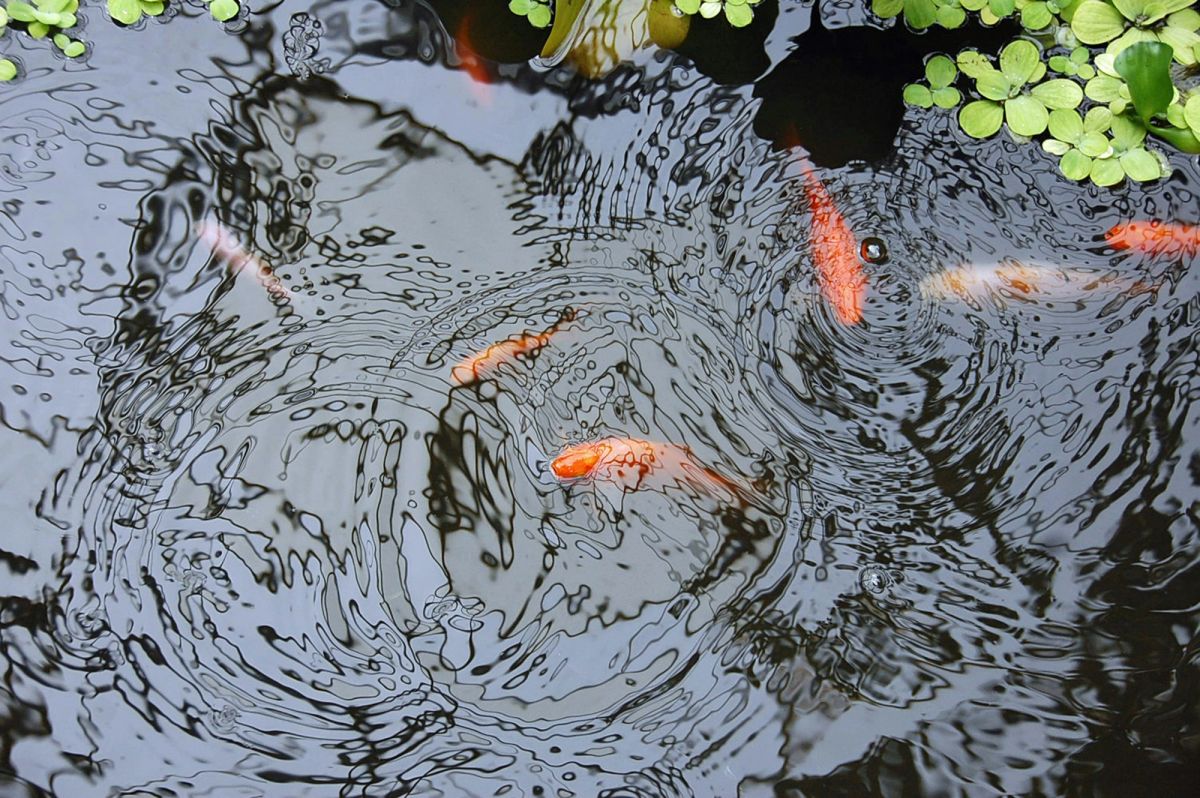
Floaters like water lettuce drift on top and pull nutrients straight from the water. They can't take our winters, so think of them as summer annuals.
Underwater plants
Submerged plants (often called oxygenators) grow below the surface and add oxygen during the day. I choose these with care, because some common ones cause real trouble in Idaho waterways.
Plants I won't put in a Treasure Valley pond
Idaho lists some popular pond plants as noxious weeds, including yellow flag iris and purple loosestrife. They still turn up for sale online, and they spread fast if seeds or roots reach a canal or the Boise River. A lot of Canyon County yards sit next to irrigation ditches, so this matters here more than people think. I stick to plants that are legal and stay where I put them.
Picking plants that handle Boise winters
Our winters freeze the top of the pond, and the shallow shelves can freeze solid. Hardy plants handle that fine as long as their crowns sit low enough in the gravel or water. Tropical lilies and floaters won't make it, so I either plan them as summer color or leave them out.
Our water also runs alkaline, with a high pH. Most hardy pond plants don't mind. Lilies bloom best with a fertilizer tablet pushed into the pot about once a month in summer.
How I plant a pond
- I check sun and shade first. Lilies want about 5 to 6 hours of direct sun to bloom well.
- In ponds I build, most marginals go straight into planting pockets in the gravel on the shelves. The roots grip the gravel and feed from the water, and there's no pot to tip over.
- Lilies go in wide, shallow pots of heavy aquatic soil, topped with gravel so fish can't dig them out.
- I aim to cover around half the water surface by midsummer, leaving open water so you can still see the fish.
- Tall plants go at the back and the edges, where they frame the view from the patio instead of blocking it.
- Before I leave, I show you what to trim and when to feed.
Fall care and winter
In fall, cut off dead leaves before they sink and rot on the bottom. Trim the lilies and move them to the deepest part of the pond so the crowns stay below the ice. Cut marginals down to just above the water. In spring they come back on their own. If you'd rather not do it yourself, my pond maintenance visits cover spring and fall plant care.
What affects the cost
The cost of aquatic plant installation comes down to the number and size of plants, whether they go in pots or gravel pockets, how much rock has to move to make room for plants in an existing pond, and whether the pond needs a clean-out first. Planting into a thick layer of muck wastes good plants, so sometimes pond cleaning comes first.
Planting the water and the yard together
The plants in the pond should match the plants around it. I design the beds around a pond as part of the same plan, the same way I handle softscapes and planting across the rest of a yard. If you don't have a pond yet, start with ecosystem pond installation, where plants are built in from day one.
Areas served
I do aquatic plant installation in Boise, Meridian, Eagle, Star, Garden City, Kuna, Nampa, Caldwell, Middleton and Hidden Springs, and up in Sun Valley and Ketchum. I'm on every job myself, and you get my direct number.
If your pond looks bare or keeps turning green, schedule a consultation for aquatic plant installation in Boise. I'll walk the pond with you and tell you which plants will do the most good.
More pond contractor services
- Backyard pond installation
- Biofiltered pond installation
- Custom pond design
- Ecosystem pond installation
- Fish pond design
- Koi pond installation
- Koi ponds
- Natural pond construction
- Pond cleaning
- Pond construction
- Pond dredging
- Pond excavation
- Pond filtration system installation
- Pond fountain installation
- Pond leak repair
- Pond lighting installation
- Pond liner replacement
- Pond maintenance
- Pond pump installation
- Pond relining
- Pond repair
- Pond water circulation system
- Pond winterization
- Pondless waterfall installation
- Small garden pond installation
- Water feature installation
- Waterfall installation
- Wildlife pond creation
Aquatic plant installation is part of my pond contractor services in Boise.
Aquatic plant installation questions
No, and you don't want them to. A little algae on the rocks is normal in a healthy pond. Plants, good filtration and beneficial bacteria together keep it from taking over.
Late spring, once the water warms up, is the best time. Plants root in fast and have the whole summer to fill in. Early summer works well too.
Yes, but koi like to nibble and dig. I top pots with gravel and use tougher plants in koi ponds. The plants give the fish cover from herons, which is worth a few chewed leaves.
Hardy lilies and most marginals come back each spring if they're cut back in fall and the crowns stay below the ice. Tropical lilies and floating plants like water lettuce don't survive our winters. I'll tell you which ones in your pond are which.
Yes. If the pond has no shallow shelves, I can work plants in with pots set on rock or by reworking part of the edge. I'll look at what you have and suggest the simplest way to get plants in.

Let's chat
Let's talk about your vision
If you're ready to create a space that's personal, timeless, and built to last, I'd love to hear what you're imagining. Let's start with a low-pressure conversation and see if we'd be a good fit to work together.
Schedule a Consultation