
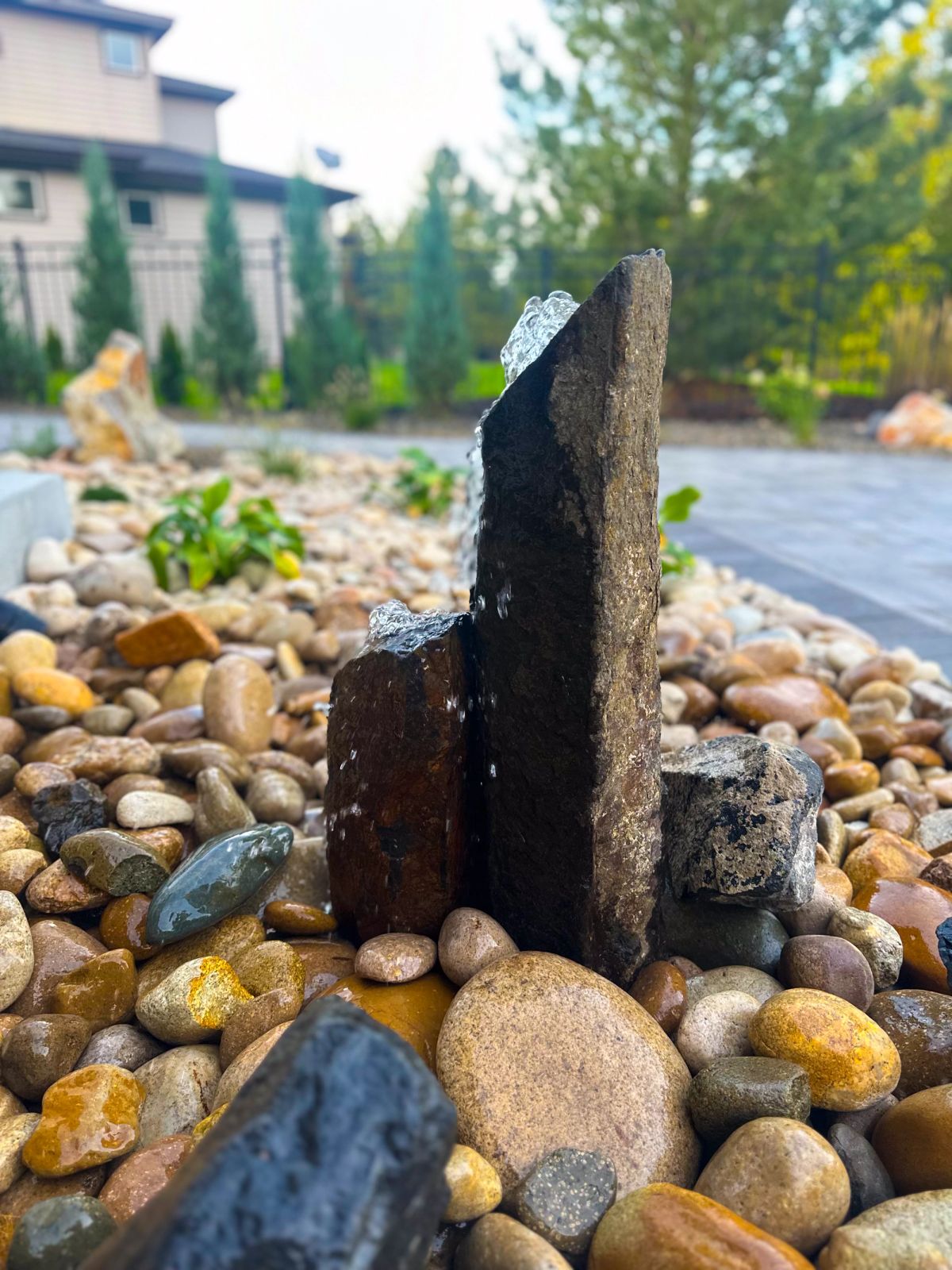
Fountain contractor
Fountain leak detection in Boise, Idaho
Fountain leak detection in Boise, Idaho, for fountains that won't hold water. Schedule a consultation and I'll find where the water is going, whether it's a leak, splash or summer evaporation.
Fountain leak detection in Boise, Idaho, for fountains that won't hold water. Schedule a consultation and I'll find where the water is going, whether it's a leak, splash or summer evaporation.
Fountain leak detection in Boise usually starts with a call like this: "I filled it on Sunday, and by Wednesday the pump was sucking air." The job comes down to one question: where is the water going? Sometimes the answer is a real leak. Often it's the weather or the splash. The fix is very different depending on which one it is.
I'm Kabe Hockema. I've been landscaping since 2012, and I build fountains with Aquascape components, so I know how these basins and pumps fit together and where water gets out. My fountain contractor page covers all my fountain work.
Leak, splash or Idaho weather?
Every fountain loses some water. In the Treasure Valley, it can lose a lot. Hot, dry air pulls water off wet stone fast, and afternoon wind carries spray past the rock. A fountain that seems fine in May can look like it's leaking by late July. Before anyone starts pulling up rock, find out which kind of loss you have.
There are three main causes:
- Evaporation. Water lost to the air. It's highest on hot, dry, windy days and lower at night.
- Splash and spray. Water that lands outside the gravel catch area and soaks into soil or pavers.
- A true leak. Water escaping through a fitting, the tubing or the basin itself.
A test you can run yourself
Fill the basin to its normal level. You can usually see the water through the pump access opening. Mark the level, turn the pump off and leave it off for a full day.
- If the level holds, the basin is likely fine. The loss happens when the fountain runs, so look at splash, wind, and the tubing and fittings between the pump and the feature.
- If the level still drops, water is leaving the basin itself, or from something attached below the water line.
Check the weather while you test. A small drop on a hot day is normal. A big one is not.
Where fountain leaks usually hide
- Splash outside the catch area. This is the most common one. Flow set too high, wind, or rock that has shifted sends water onto dry ground.
- Fittings at the base of the feature. The connection where tubing meets an urn or column can loosen or crack.
- Tubing split by freezing. Water left in the line over winter freezes and splits it.
- A low edge. If the ground settles, part of the catch area can tip outward, and water runs off instead of back to the basin.
- Wicking. Soil, mulch or plant roots touching the wet rock at the edge can draw water out like a paper towel.
- A damaged basin. Less common, but a basin can crack if it was set on a sharp rock or the ground under it shifted.
How I track a leak down
I start with your test results, or I run the test myself. Then I look for clues: wet soil, soft ground, or a patch of plants greener than the rest. I run the fountain and watch where the water lands, especially when there's a breeze. I check each fitting and the length of tubing. If needed, I pull back rock around the feature or along the edge to see the basin and catch area directly. A little non-toxic dye near a suspect spot shows which way the water moves.
Clay soil in a lot of Boise, Meridian and Nampa yards makes this harder. Clay holds water and spreads a wet spot wide, so the soggy patch you see may sit a few feet from where the water actually gets out.
Fixing it so it stays fixed
The fix matches the cause:
- Lower the flow or widen the catch area for splash and wind.
- Reseal or replace loose fittings and split tubing.
- Raise a low edge and reset the rock.
- Pull back soil and mulch that's wicking water away.
- Re-level or replace a basin that has shifted or cracked.
A leak that keeps the water low can make the pump run dry and burn out, so finding it early can save you a pump. If the pump has already taken damage, my fountain repair page covers what happens next.
What affects the cost
The cost depends on what I find and how much rock has to come up to reach it. A loose fitting near the surface is a small job. A cracked basin under a heavy column is a bigger one. Sometimes the best answer is rebuilding on a new basin, which turns into a pondless fountain installation with a catch area sized right from the start.
The same leak sources show up in pondless waterfalls, which use a similar buried basin. I track those down the same way.
Where I do fountain leak detection
I do fountain leak detection across Ada and Canyon County: Boise, Garden City, Eagle, Meridian, Star, Kuna, Nampa, Caldwell and Middleton, along with Hidden Springs. I take jobs in Sun Valley and Ketchum as well.
Find out where the water is going
If your fountain won't hold water, schedule a consultation for fountain leak detection in Boise. Run the pump-off test first if you can, and tell me what you saw. It gives us a head start.
More fountain contractor services
- Architectural water features
- Backyard fountain installation
- Custom fountain design
- Fountain installation
- Fountain landscaping
- Fountain repair
- Fountains
- Landscape fountain design
- Outdoor water features
- Patio fountain installation
- Pondless fountain installation
- Waterfall installation
Fountain leak detection is part of my fountain contractor services in Boise.
Fountain leak detection questions
There's no single number, because it depends on heat, wind and how much the feature splashes. A noticeable drop on a hot, windy day is normal here. If you're refilling every day in mild weather, something else is going on.
It can if the fountain sits close to the foundation and water soaks the soil there for weeks. Clay soil holds that water and can swell. If your fountain is near the house and losing water, find the cause soon.
Yes, it can. When the water drops below the pump, it pulls air and can overheat. A pump that runs dry for long may burn out.
Usually not. Most leaks are splash, a fitting or a low edge, and those get fixed by moving some rock. Rebuilding only makes sense when the basin is cracked or badly out of level.

Let's chat
Let's talk about your vision
If you're ready to create a space that's personal, timeless, and built to last, I'd love to hear what you're imagining. Let's start with a low-pressure conversation and see if we'd be a good fit to work together.
Schedule a Consultation