Sustainable Landscaping
Sustainable Landscaping Practices for Boise Homeowners
Sustainable landscaping in Boise isn't a niche interest. It's a practical response to the conditions we landscape in: 12 inches of annual rainfall, hot dry summers, alkaline soil, and growing water demand all create real pressure that smart design addresses.
Sustainable landscaping in Boise isn't a niche interest or a political statement. It's a practical response to the conditions we landscape in. Twelve inches of annual rainfall, hot dry summers, alkaline soil, and a growing urban population all create real pressure on water resources. The landscapes that will perform best in the Treasure Valley over the next twenty years are the ones designed with sustainability built in from the beginning.
Right Plant, Right Place
The foundation of sustainable landscaping is matching plants to their conditions rather than forcing conditions to suit plants. In Boise, that means selecting trees, shrubs, and perennials suited to alkaline soil, summer heat, and limited rainfall. Our guide to native plants for Boise landscaping covers which species are best suited to the Treasure Valley and how to integrate them into a designed landscape.
Water Conservation
Efficient irrigation is the highest-leverage sustainable practice for most Boise properties. Drip systems for planted beds, smart controllers that adjust to actual weather conditions, hydrozoning that matches irrigation to plant needs, and rain sensors that interrupt scheduled runs during rainfall all reduce water use without reducing plant health.
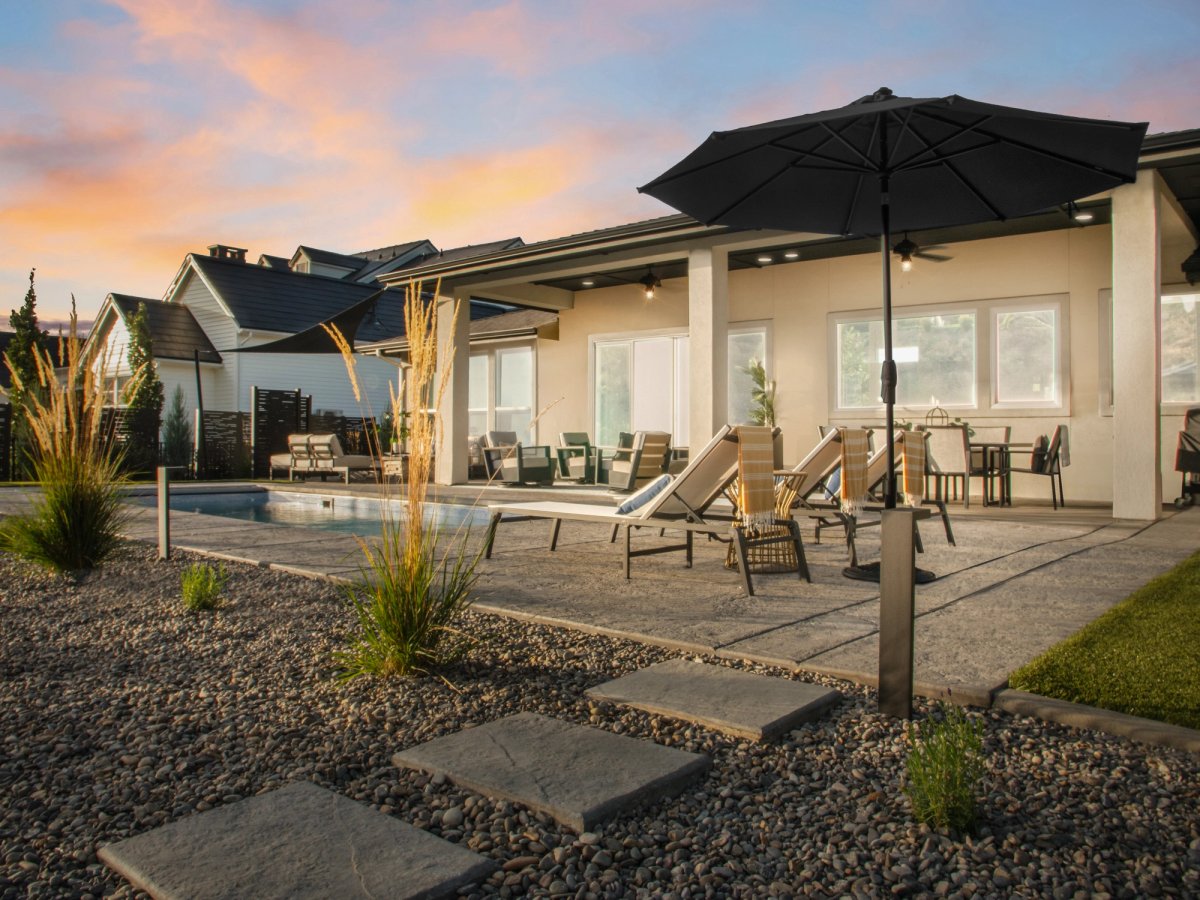
Reducing total turf area is another significant lever. Lawn is the highest-demand element in most residential landscapes. Replacing sections of turf with drought-tolerant ground covers, decomposed granite, or planted beds reduces overall water demand and maintenance requirements.
Soil Health
Sustainable landscapes build soil health over time rather than depleting it. Organic matter through compost incorporation at installation, mulching to feed soil biology as it breaks down, and minimizing bare soil exposure all contribute to a living soil ecosystem that supports healthy plants with fewer inputs. In Boise's alkaline soils, organic matter is particularly valuable: it moderates pH slightly, improves drainage in clay soils, and introduces microbial life that improves nutrient cycling.
Sustainable landscapes build soil health over time rather than depleting it, and the result is plants that need fewer inputs, less water, and less intervention.
Support for Local Pollinators
Native plants provide far more ecological value to local pollinators than ornamental exotics, since they've co-evolved together. Our guide to supporting pollinators with native plants explains which species matter most and how to sequence bloom times for year-round habitat.
Hardscaping With Permeability
Impervious hardscape contributes to stormwater runoff, carrying pollutants into waterways and reducing groundwater recharge. Permeable pavers, decomposed granite, and gravel surfaces allow water to infiltrate rather than run off. For large patio areas, incorporating permeable sections or designing drainage that directs water to planted areas rather than storm drains is a meaningful sustainability choice.
Mulch is one of the simplest and most impactful sustainable practices in any Boise garden. Our guide to mulch and ground covers for Boise yards covers organic mulch, rock mulch, and living ground covers and how each performs in Treasure Valley conditions.
Frequently Asked Questions
Is sustainable landscaping more expensive?
It depends on how you account for cost. The installation cost of a well-designed sustainable landscape is comparable to conventional landscaping. The long-term costs, including water bills, fertilizer, pest control, and plant replacement, are typically lower. Over a 10-year horizon, sustainable landscapes almost always cost less to maintain.
Can a sustainable landscape still look beautiful?
Absolutely. The best sustainable landscapes in the Treasure Valley look intentional, lush, and cared-for. The key is design: clear structure, thoughtful plant combinations, and clean maintenance of what's there. Sustainability doesn't mean a wild or neglected appearance; it means working with the site rather than against it.
Written by
Kabe Hockema
Owner and principal designer at Hockema Landscape Design & Build. Twenty years of experience designing and building custom landscapes across Boise, Eagle, Meridian, Sun Valley, and the broader Treasure Valley.
Keep reading
Related Articles


Let's chat
Let's talk about your vision
If you're ready to create a space that's personal, timeless, and built to last, I'd love to hear what you're imagining. Let's start with a low-pressure conversation and see if we'd be a good fit to work together.
Schedule a Consultation