Hardscaping & Outdoor Living
Retaining Walls on Sloped Boise Properties: What You Need to Know
Sloped properties are common in the Treasure Valley, particularly in Harris Ranch, the Eagle foothills, and hillside neighborhoods. A retaining wall that's built wrong doesn't just look bad. It fails.
Sloped properties are common in the Treasure Valley, particularly in the Eagle foothills, Harris Ranch in Boise, and the hillside neighborhoods that have developed along the Boise Front. They're also where I see some of the most significant hardscaping failures, because a retaining wall that's built wrong doesn't just look bad. It fails, sometimes suddenly, sometimes slowly, but it fails.
What a Retaining Wall Actually Does
A retaining wall holds back soil. It resists the lateral pressure of the earth behind it. That pressure is significant, and it increases with wall height, soil moisture, and the weight of anything above the wall (structures, vehicles, saturated soil). A wall that looks solid may be under enormous stress that only becomes visible when it shifts, bulges, or collapses.
Drainage Is the Critical Factor
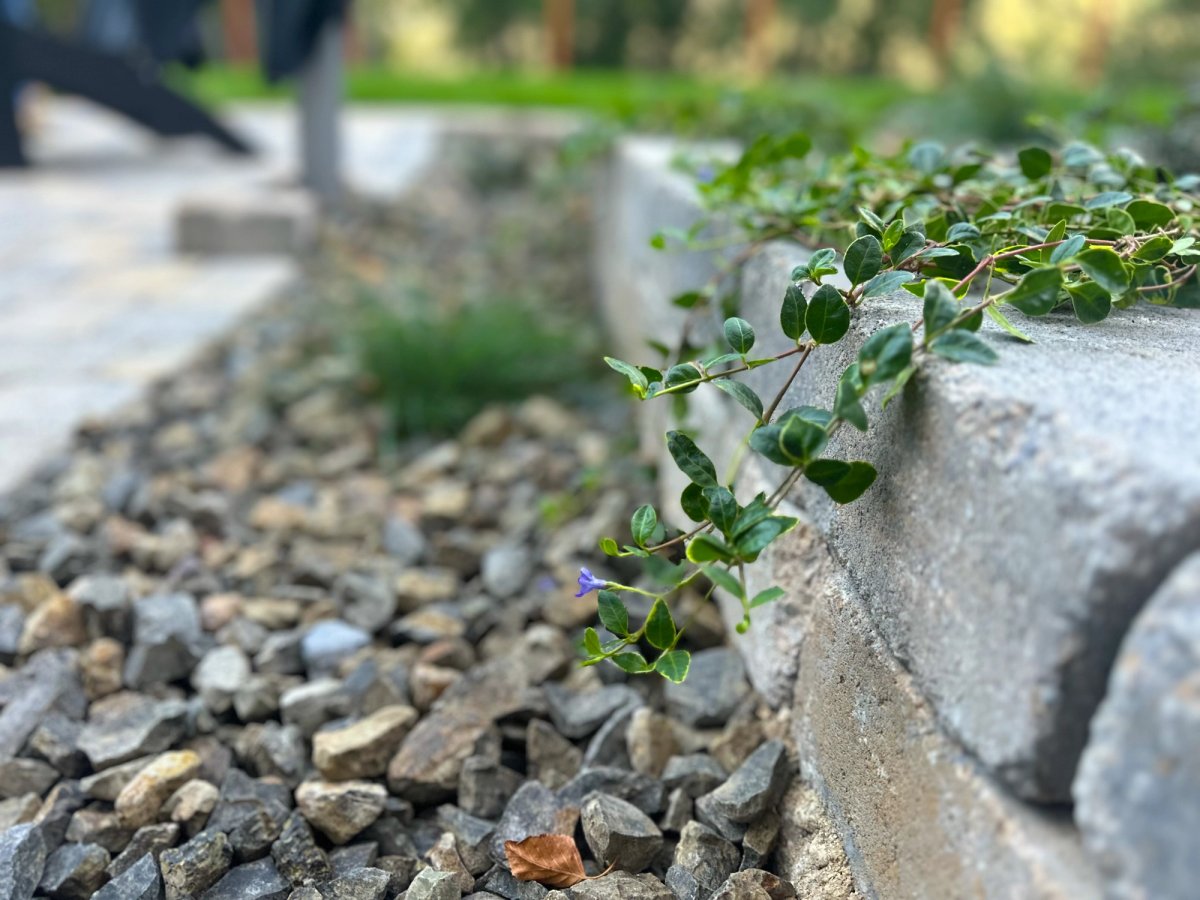
The most common retaining wall failure in the Treasure Valley isn't poor construction. It's poor drainage. When water saturates the soil behind a wall and can't escape, it dramatically increases the lateral pressure on the wall. In Boise's climate, that saturated soil also freezes and expands in winter, pushing the wall forward. The solution is drainage aggregate (gravel) directly behind the wall, a drainage pipe at the base of the wall to carry water away, and weep holes through the wall face at regular intervals.
The most common retaining wall failure isn't poor construction. It's poor drainage. Saturated soil behind a wall dramatically increases lateral pressure.
Height Matters for Engineering Requirements
Retaining walls under 4 feet tall are typically considered routine landscaping work in Boise. Walls over 4 feet may require engineered design and a building permit from the City of Boise since the structural demands are different, and the consequences of failure are more significant. For any wall over 3 feet that's retaining significant fill or supporting a structure, I strongly recommend having a structural engineer involved, even if local code doesn't strictly require it.
Material choice for retaining walls involves the same freeze-thaw considerations as patio surfaces. Our hardscape materials guide covers block, natural stone, and their performance in Idaho's climate.
Material Options for Boise Retaining Walls
Segmental Concrete Block
Engineered retaining wall block, including brands like Allan Block and Versa-Lok, is the most common choice for residential retaining walls in the Treasure Valley. It's designed with a batter (backward lean) that distributes lateral forces effectively. For walls over 4 to 5 feet, geogrid reinforcement woven into the backfill at intervals significantly increases structural integrity.
Natural Stone
Dry-stacked or mortared natural stone walls bring a character and permanence that manufactured block can't match. Dry-stacked walls are inherently flexible and can accommodate some movement without cracking, but require more skill to build correctly.
For a specific look at retaining walls on hillside properties in Boise, including Harris Ranch and foothills neighborhoods, our Harris Ranch landscaping guide covers how terraced walls work with slope and view preservation on those specific sites.
Frequently Asked Questions
Do I need a permit for a retaining wall in Boise?
Walls under 4 feet typically don't require a permit in Boise. Walls over 4 feet, or walls supporting structures or surcharges, typically do. Check with the City of Boise Development Services for the current requirements.
How long do retaining walls last in Boise?
A properly built segmental concrete block or natural stone retaining wall should last 30 to 50+ years with normal maintenance. Timber walls typically last 15 to 20 years. The most significant factor affecting lifespan is drainage: walls with poor drainage degrade far faster regardless of material.
Written by
Kabe Hockema
Owner and principal designer at Hockema Landscape Design & Build. Twenty years of experience designing and building custom landscapes across Boise, Eagle, Meridian, Sun Valley, and the broader Treasure Valley.
Keep reading
Related Articles


Let's chat
Let's talk about your vision
If you're ready to create a space that's personal, timeless, and built to last, I'd love to hear what you're imagining. Let's start with a low-pressure conversation and see if we'd be a good fit to work together.
Schedule a Consultation