Plant Selection & Design
Which Plants Thrive in Boise's High Desert Climate?
Boise sits in a semi-arid high desert with about 12 inches of rain a year, summers above 95°F, and winters that can drop below zero. Here's what actually grows here.
I get asked this more than almost any other question: what will actually grow here? Boise sits in a semi-arid high desert climate with about 12 inches of rain a year, summers that push into the 90s and beyond, and winters that can drop below zero even though the USDA officially classifies most of the Treasure Valley as Zone 7a. Plant something based on a general tag without thinking about our specific conditions and you're going to lose plants and money.
Understanding Boise's Climate
The Treasure Valley receives an average of about 12 inches of rain per year, with most of that falling in spring and early winter, not during the summer heat when plants actually need water most. The USDA Plant Hardiness Zone for most of Boise is 7a, meaning average minimum winter temperatures between 0°F and 5°F. The last spring frost typically falls around May 6, and the first fall frost arrives around October 8, giving us roughly 150 frost-free days.
Treasure Valley soils are typically alkaline with high calcium content, particularly south of the Boise River. Many properties also have a caliche hardpan at varying depths that restricts drainage and root penetration. Understanding Boise's soil conditions is the single most important step before choosing plants or hardscaping.
The soil chemistry is the single most important factor when choosing plants for Boise landscapes.
Native Shrubs That Reliably Perform
Native shrubs are my starting point for any Boise planting plan. Bitterbrush (Purshia tridentata) is one of the most drought-tolerant options in the region, with fragrant yellow flowers in spring and essentially zero irrigation once established. Rubber rabbitbrush (Ericameria nauseosa) brings late-season color when most other plants are winding down. Serviceberry (Amelanchier alnifolia) offers white spring flowers, edible summer berries, and brilliant fall color. Lewis's mock-orange (Philadelphus lewisii), Idaho's state flower, is a fragrant large shrub for background plantings. Ninebark (Physocarpus malvaceus) provides bird habitat and four-season interest.
Native Grasses
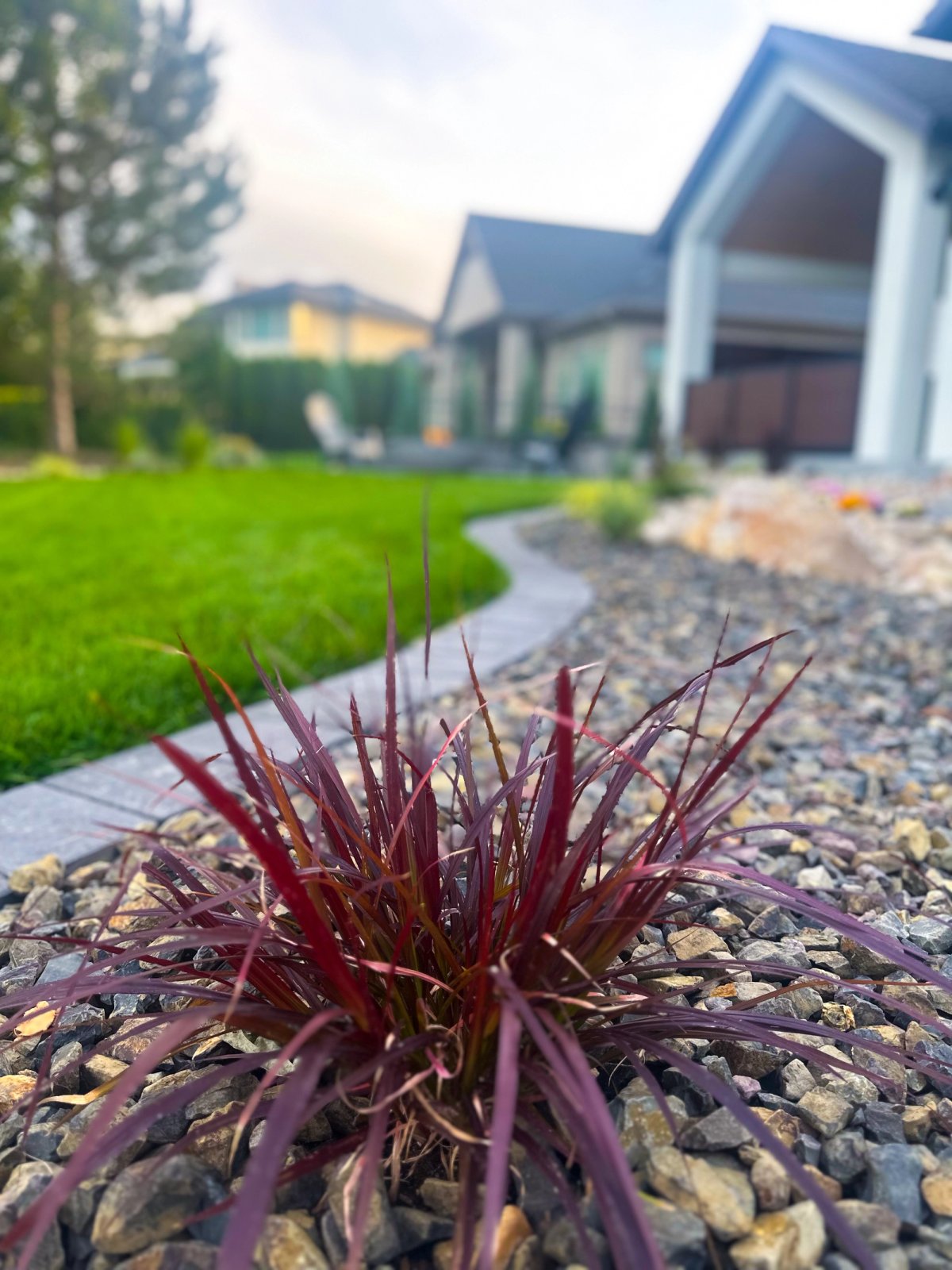
Idaho fescue (Festuca idahoensis) is the fine-textured bunchgrass that once dominated the Boise foothills. Extremely drought-tolerant once established, it works as a ground cover alternative in full sun with good drainage. Bluebunch wheatgrass (Pseudoroegneria spicata) handles dry slopes and open areas. For ornamental grasses that aren't native but perform reliably in Boise, Karl Foerster featherreed grass and blue oat grass both handle our summers without complaint.
Perennials
Russian sage (Perovskia atriplicifolia) is one of the most reliable perennials in Boise: drought-tolerant, long-blooming from July through September, and deer-resistant. Penstemon species native to southern Idaho, particularly Penstemon strictus, are excellent hummingbird plants with vivid blue-purple spikes. Blanketflower (Gaillardia) blooms all summer with minimal water. Catmint (Nepeta) softens patio edges beautifully. Yarrow (Achillea) spreads and self-seeds, making it excellent for naturalizing dry areas.
Trees for Difficult Boise Sites
Hackberry (Celtis occidentalis) is my most-recommended shade tree for difficult Boise sites, tolerating alkaline soil, drought, heat, and reflected heat from hardscapes. Bur oak (Quercus macrocarpa) and Chinkapin oak (Quercus muehlenbergii) handle alkaline conditions far better than more common oaks like pin oak. For a deeper look at what works and what doesn't, our tree selection guide covers the full picture.
What Struggles Here
Acid-loving plants, including azaleas, rhododendrons, and blueberries, want soil conditions our alkaline Treasure Valley soils simply don't provide without significant amendment and ongoing acidic fertilizer. Pin oak develops severe chlorosis in our soils and is one of the most commonly failing trees I see on Boise properties. Many plants labeled Zone 7 on the tag were rated for milder maritime climates, not Boise's continental conditions. Plan conservatively: if a plant is borderline, assume Zone 6 conditions.
If reducing water use is a priority alongside good plant performance, xeriscaping in Boise offers a practical framework that works with these same native and drought-adapted plants.
Frequently Asked Questions
What USDA hardiness zone is Boise in?
Boise is Zone 7a on the 2023 USDA map (0°F to 5°F average minimum). However, experienced local gardeners often plan for Zone 6b since hard freezes below zero still occur. Your specific microclimate can shift conditions by a full zone in either direction.
Do I need to amend soil before planting in Boise?
For most properties, yes. Our alkaline soils limit nutrient availability for many plants. Incorporating 3 to 4 inches of compost into planting beds before installation improves structure and biology. The University of Idaho Extension Ada County office offers soil test kits if you want precise data.
Are there plants I should always avoid in Boise?
Pin oak, red maple, sweetgum, rhododendrons, and azaleas all struggle significantly in our alkaline soils. Many ornamental plants marketed as Zone 7 were rated for coastal climates. Check the provenance before buying.
Written by
Kabe Hockema
Owner and principal designer at Hockema Landscape Design & Build. Twenty years of experience designing and building custom landscapes across Boise, Eagle, Meridian, Sun Valley, and the broader Treasure Valley.
Keep reading
Related Articles


Let's chat
Let's talk about your vision
If you're ready to create a space that's personal, timeless, and built to last, I'd love to hear what you're imagining. Let's start with a low-pressure conversation and see if we'd be a good fit to work together.
Schedule a Consultation